Yard House Bread Pudding Recipe (best bread pudding in town)
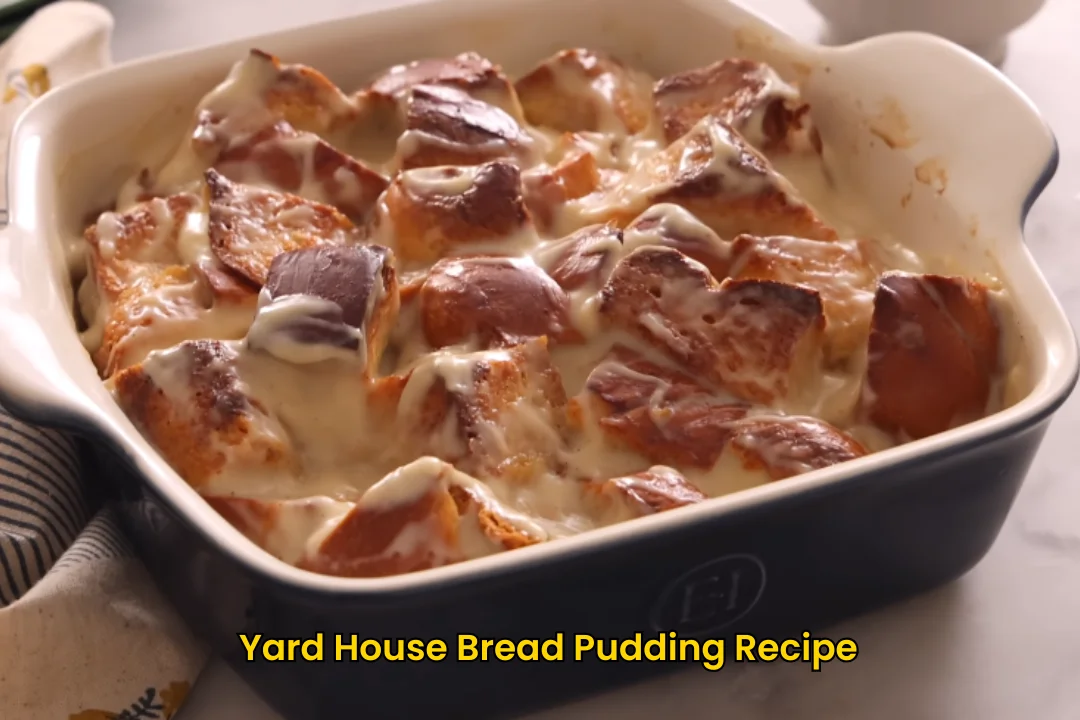
This homemade Yard House Bread Pudding Recipe brings together soft, buttery bread, warm cinnamon, and a creamy vanilla pouring custard for a dessert that feels right at home after a restaurant-style dinner.
It is rich without being complicated, and the best part is watching that golden top come out of the oven while the sweet vanilla sauce comes together on the stove.
I love bread pudding because it makes simple ingredients taste like something special.
Brioche or challah soaks up the cinnamon milk custard, giving every bite a soft, almost melt-in-your-mouth center with lightly crisp edges.
The warm vanilla sauce takes it a step further, adding just the right amount of sweetness and creaminess.
While this is a homemade interpretation rather than a verified recipe from Yard House, it captures the kind of comforting, indulgent dessert you might crave after a restaurant meal.
Serve your bread pudding warm with a generous spoonful of vanilla custard sauce, or add a scoop of vanilla ice cream for that classic hot-and-cold dessert combination.
You can also finish your serving with toasted pecans, a little cinnamon, or chocolate chips if you want to make it your own.

Why You’ll Love This Yard House Bread Pudding
This Yard House Bread Pudding is the kind of dessert I turn to when I want something cozy, rich, and easy to share. It uses everyday ingredients, but the combination of buttery bread, cinnamon, vanilla, and creamy custard makes it taste like a proper restaurant dessert.
This bread pudding is especially good for using slightly stale brioche, challah, or leftover bread that might otherwise go to waste. The bread absorbs the sweet milk mixture and bakes into a soft, tender pudding with a golden top.
The vanilla pouring custard is what makes this version stand out. It is smooth, warm, and sweet, and you can adjust it with bourbon, rum, or brandy for a deeper flavor.
Unlike a complicated pastry, this bread pudding does not require special baking skills, making it a lovely choice for a family dessert or a relaxed dinner with friends.
What You Need for the Bread Pudding
You do not need a long shopping list to make this dessert. The bread, milk, eggs, butter, sugar, and cinnamon create the main pudding, while a few simple ingredients turn into the creamy vanilla sauce
I recommend using rich bread and good vanilla because those two ingredients make a noticeable difference in the final flavor.
For the best texture, use bread that is slightly stale or dried out. Fresh bread can work, too, but it may become too soft before the custard has fully set.
If you like a little crunch, you can add pecans or toasted coconut. Chocolate chips and dried fruit are also easy ways to change the flavor without changing the basic recipe.
Perfect For
A cozy family dessert: Make a warm casserole that everyone can spoon into after dinner.
A restaurant-style night at home: Serve it with vanilla sauce and ice cream for a special finish.
Using leftover bread: Brioche, challah, and other sturdy breads work beautifully.
Holiday gatherings: Prepare the pudding ahead and bake it when you are ready.
A simple dinner party: The pudding looks inviting in individual bowls with extra sauce poured over the top.
A sweet weekend treat: You can enjoy the leftovers warm or cold the next day.
Ingredients for Yard House Bread Pudding
For the Bread Pudding
6 cups rich bread, cut into 2-inch cubes: Brioche or challah gives you the soft, buttery texture that makes bread pudding so good. Slightly stale bread is ideal because it absorbs the custard well. Sourdough or another sturdy bread can also work, although the flavor will be a little different.
2 cups whole milk: Whole milk creates a creamy, tender custard. I prefer it here because lower-fat milk can produce a slightly lighter pudding. You can use 2% milk if that is what you have.
½ cup granulated sugar (100 g): This sweetens the bread pudding without overpowering the cinnamon and vanilla. If you plan to add chocolate chips or very sweet dried fruit, you can reduce the sugar slightly.
3 tablespoons unsalted butter: Butter adds richness to the warm milk mixture and helps give the finished pudding a soft, luxurious texture. Unsalted butter lets you control the amount of salt.
½ teaspoon salt: A small amount of salt balances the sugar and helps the cinnamon and vanilla taste more rounded.
1 teaspoon ground cinnamon: Cinnamon gives the pudding its warm, familiar flavor. If you love a stronger spice note, you can add a small pinch of nutmeg, too.
3 large eggs: Eggs help the milk mixture set into a soft custard as the pudding bakes. Use room-temperature eggs if possible, and add them only after the warm milk mixture has cooled.
1 tablespoon vanilla extract: Vanilla brings the flavors together and adds that sweet bakery-style aroma. Pure vanilla extract is lovely, but a good imitation vanilla can also work.
Optional additions: Toasted pecans, chocolate chips, dried fruit, or toasted coconut can be scattered among the bread cubes. I like toasted pecans for crunch, while chocolate chips make the pudding feel extra indulgent. Keep the additions moderate so the bread still has room to absorb the custard.
For the Vanilla Pouring Custard
1 cup whole milk: This forms the lighter part of the pouring sauce and keeps it easy to spoon over the pudding.
1 cup heavy cream: Heavy cream gives the sauce a rich, smooth body. If you prefer a lighter sauce, you can replace the milk and cream with 2 cups of half-and-half.
2 tablespoons unsalted butter: Butter adds a silky finish and a little extra richness.
½ cup packed light brown sugar (110 g): Brown sugar gives the sauce a gentle caramel note that works beautifully with cinnamon bread pudding. Pack it firmly into your measuring cup.
2 tablespoons cornstarch: Cornstarch thickens the sauce so it coats the pudding instead of running straight to the bottom of the plate.
¼ cup water, bourbon, dark rum, or brandy: This is used to make the cornstarch slurry. Water keeps the sauce alcohol-free, while bourbon, rum, or brandy adds a deeper flavor. If you use alcohol, some may remain after cooking.
1 tablespoon vanilla extract or vanilla bean paste: Vanilla makes the sauce taste warm and fragrant. Vanilla bean paste adds tiny vanilla specks and a slightly more pronounced vanilla flavor.
Pinch of salt, optional: Add this if you want to balance the sweetness and make the sauce taste less one-dimensional.
For the Baking Dish
A little extra unsalted butter: Use this to grease an 8 × 8-inch casserole dish. Coat the bottom and sides well so the pudding releases easily after baking.
Required Kitchen Equipment
8 × 8-inch casserole dish: This is the right size for the amount of bread and custard in this recipe. A glass or ceramic baking dish works well.
Medium saucepan: You will use one saucepan for the cinnamon milk mixture and another batch of sauce. If you only have one, simply wash it between uses.
Small saucepan: A second saucepan makes it easier to prepare the vanilla custard while the bread pudding rests after baking.
Mixing bowl: Use a small bowl to whisk the eggs and another to prepare the cornstarch slurry.
Whisk: A whisk helps combine the eggs, milk, and vanilla smoothly. It is also useful for preventing lumps in the sauce.
Measuring cups and spoons: Accurate measurements matter here, especially for the cornstarch, sugar, and liquid ingredients.
Rubber spatula or wooden spoon: Use one to stir the warm milk mixture and scrape the saucepan gently as the sauce thickens.
Baking sheet, optional: If your bread is fresh, a baking sheet makes it easy to dry the cubes in the oven before you begin.
How to Make Yard House Bread Pudding
Step 1 – Prepare the Oven and Baking Dish
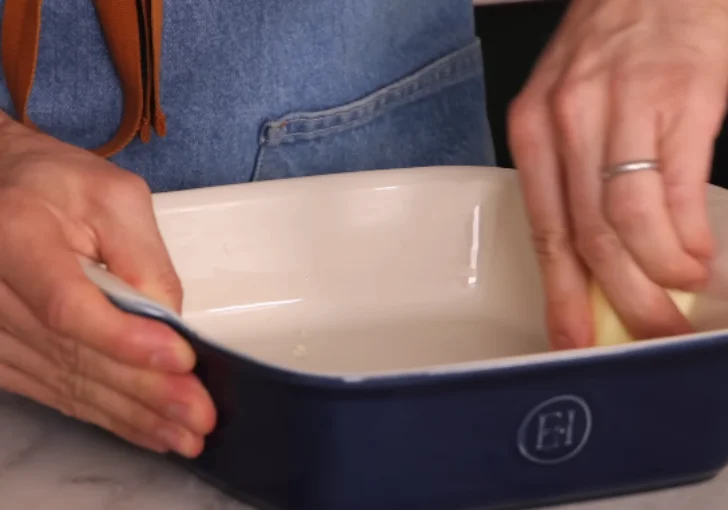
Preheat your oven to 350°F (175°C). Lightly butter an 8 × 8-inch casserole dish, making sure to coat the bottom and sides so the bread pudding does not stick. Set the dish aside while you prepare the bread.
Step 2 – Cut and Prepare the Bread
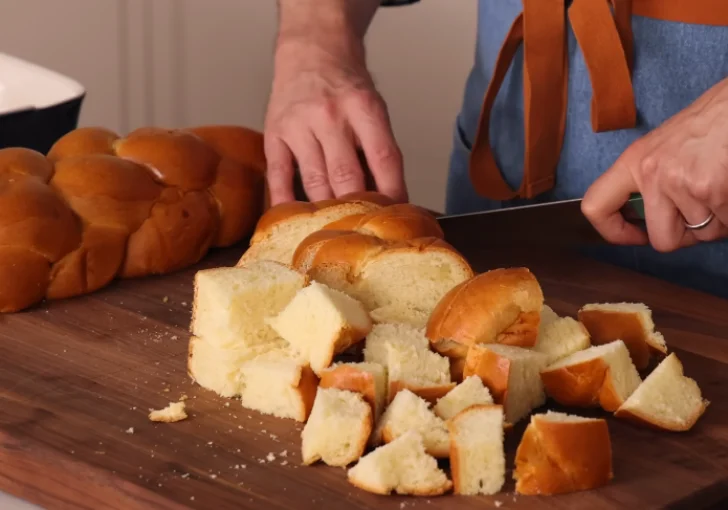
Cut the bread into roughly 2-inch cubes until you have about 6 cups. Brioche or challah will give your bread pudding a rich, buttery texture, but you can also use sourdough or another type of bread you have on hand. Slightly stale bread works especially well because it absorbs the custard without falling apart too quickly. If your bread is fresh, spread the cubes on a baking sheet and let them sit out to dry, or place them in a 250°F oven for about 10 minutes. Allow the bread to cool before using it.
Step 3 – Arrange the Bread in the Dish
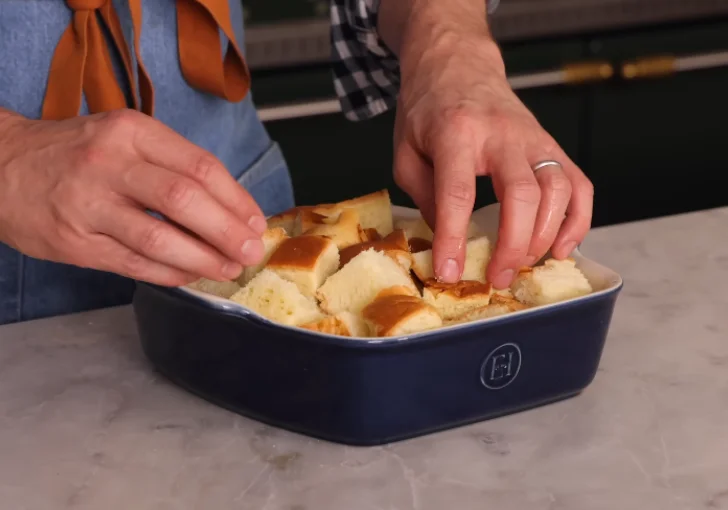
Transfer the bread cubes to the buttered casserole dish. Spread them into an even layer, arranging some of the crusts facing upward for a more attractive finish. If you want to add toasted pecans, chocolate chips, dried fruit, or toasted coconut, scatter them among the bread cubes now.
Step 4 – Warm the Cinnamon Custard Mixture
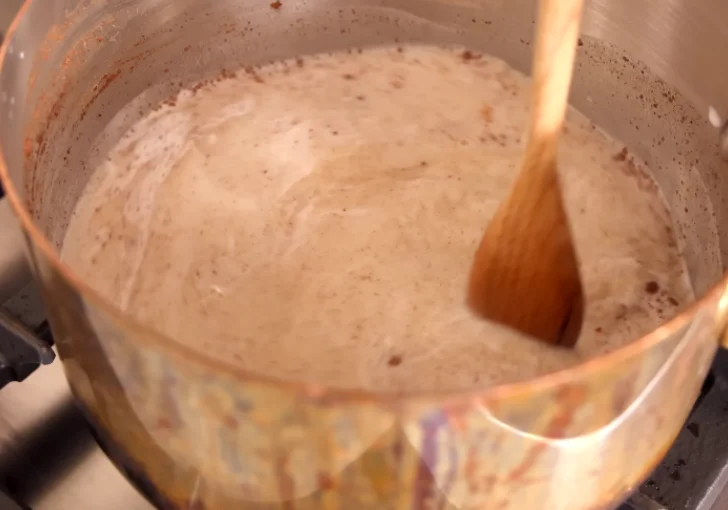
Add the whole milk, granulated sugar, butter, salt, and cinnamon to a saucepan. Place the saucepan over medium heat and stir occasionally until the butter has melted and the milk is warm. Do not bring the mixture to a boil. Once the butter has melted and the ingredients are well combined, remove the saucepan from the heat.
Step 5 – Cool the Milk Mixture
Let the warm milk mixture cool for about 10 minutes. This is important because adding eggs to very hot milk can cause them to scramble, leaving unwanted cooked egg pieces in your custard.
Step 6 – Add the Eggs and Vanilla
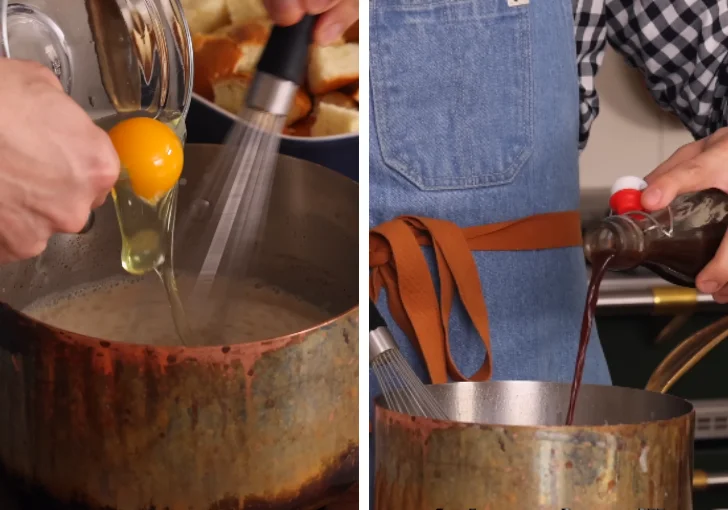
Crack the eggs into a small bowl and check for any pieces of shell. Whisk the eggs into the cooled milk mixture one at a time until each egg is fully incorporated. Add the vanilla extract and whisk again until the custard is smooth and evenly mixed.
Step 7 – Pour the Custard Over the Bread
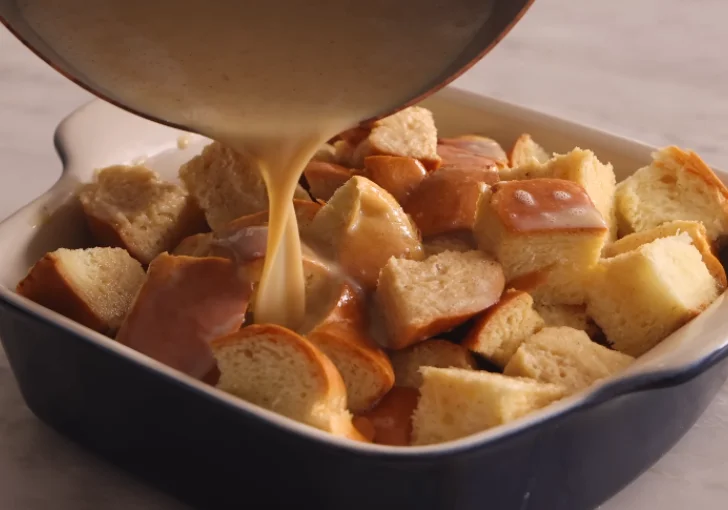
Slowly pour the prepared custard over the bread cubes in the casserole dish. Move the bread around gently if needed so the liquid reaches the bottom and coats all the pieces. Check that there are no dry bread cubes remaining on top. The bread should be evenly soaked in the custard.
Step 8 – Let the Bread Soak
Leave the assembled bread pudding at room temperature for about 20 minutes. This gives the custard time to penetrate the bread, helping the finished pudding turn soft and moist throughout. If you want to prepare it ahead, cover the dish and refrigerate it until you are ready to bake.
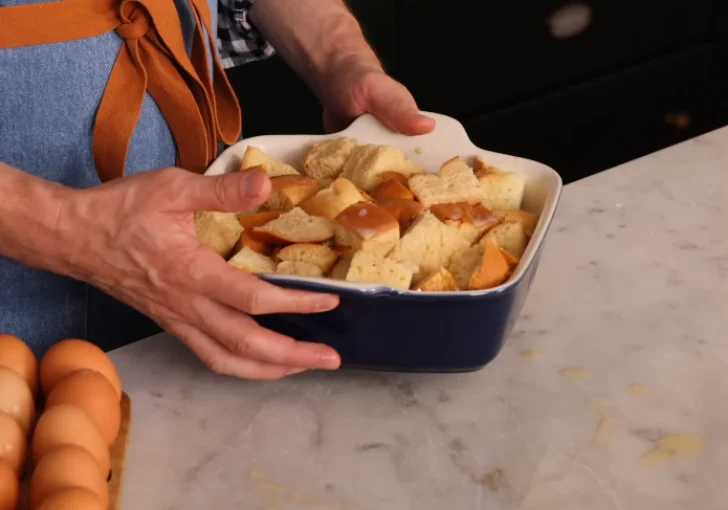
Step 9 – Bake the Bread Pudding
Place the casserole dish in the preheated oven and bake at 350°F (175°C) for 40–45 minutes. The top should become nicely golden, and a knife inserted into the center should come out clean. If the center still looks wet or loose, continue baking for a few more minutes and check again. Once baked, remove the dish from the oven and let the bread pudding rest briefly while you finish the sauce.
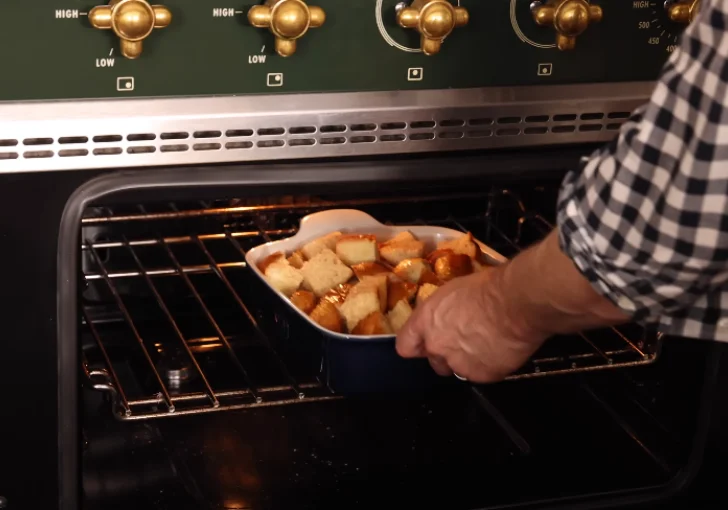
Step 10 – Combine the Sauce Ingredients
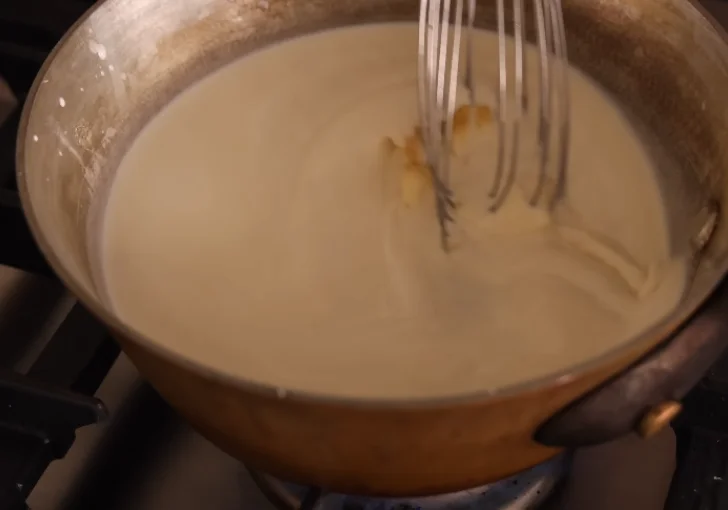
To make the vanilla pouring custard, add the whole milk, heavy cream, butter, and packed light brown sugar to a medium saucepan. Place the saucepan over medium heat and stir occasionally with a whisk as the butter melts and the sugar dissolves. You can substitute 2 cups of half-and-half for the milk and cream if preferred.
Step 11 – Prepare the Cornstarch Slurry
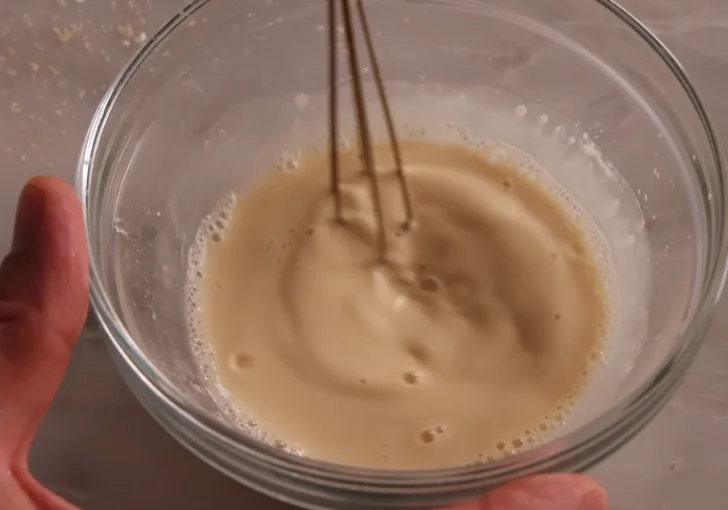
In a small bowl, combine the cornstarch with ¼ cup of water, bourbon, dark rum, or brandy. Whisk until the cornstarch has completely dissolved and the mixture is smooth. This slurry will help thicken the sauce and give it a rich, pourable texture. If you use alcohol, remember that some alcohol may remain after cooking.
Step 12 – Thicken the Vanilla Custard Sauce
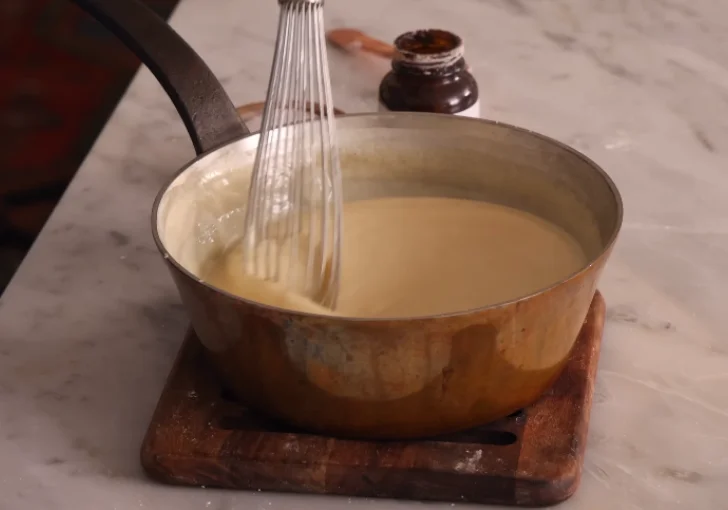
Once the milk and cream mixture begins steaming and the butter has melted, slowly pour in the cornstarch slurry while whisking constantly. Continue stirring over medium heat until the sauce thickens noticeably. This should happen fairly quickly. If the mixture begins to thicken too fast, lower the heat to prevent it from sticking to the bottom of the saucepan.
Step 13 – Add the Vanilla and Finish the Sauce
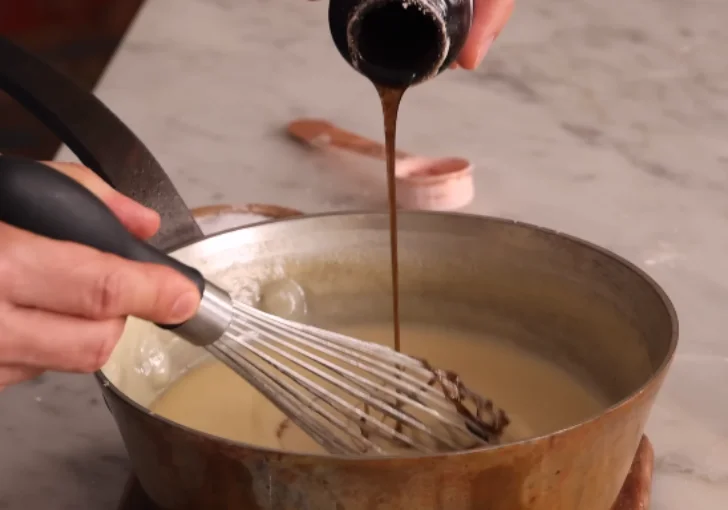
Remove the thickened sauce from the heat. Stir in the vanilla extract or vanilla bean paste until fully combined. Add a pinch of salt if you want a little extra contrast against the sweetness. The finished sauce should be smooth, creamy, and thick enough to coat the back of a spoon while still being easy to pour.
Step 14 – Serve the Bread Pudding
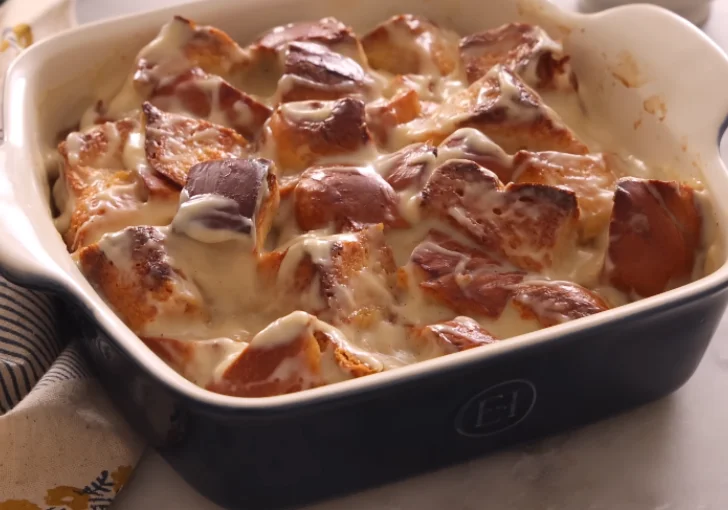
Spoon the warm vanilla custard sauce over the freshly baked bread pudding. Cut the pudding into portions and serve while warm, adding more sauce to each serving if desired. You can also serve it with a scoop of vanilla ice cream for a richer dessert.
Bread Pudding Perfection Tips
Use slightly stale bread: It absorbs the custard more evenly than very fresh bread. If you only have fresh bread, dry the cubes first.
Keep the bread cubes close to 2 inches: Very small pieces can turn mushy, while very large pieces may stay dry in the middle.
Do not boil the cinnamon milk: Warm the milk gently so the butter melts and the sugar dissolves without overheating the mixture.
Cool the milk before adding eggs: This is the easiest way to avoid scrambled egg bits in your custard.
Give the bread time to soak: The 20-minute rest helps the custard reach the center of the bread instead of leaving dry spots.
Do not overbake: Start checking around 40 minutes. You want the pudding set but still moist, not dry or rubbery.
Make the slurry smooth: Whisk the cornstarch into the liquid before adding it to the saucepan. This prevents lumps in the vanilla sauce.
Keep the sauce pourable: The sauce will thicken as it cools, so remove it from the heat when it is just thick enough to coat a spoon.
Taste before adding toppings: The pudding and sauce are already sweet. If you use chocolate chips, dried fruit, or ice cream, consider keeping the garnish simple.
How to Tell When Bread Pudding Is Done
Your bread pudding is ready when the top is golden, the edges look set, and the center no longer appears wet or loose. Insert a knife into the middle; it should come out without liquid custard clinging to it. The pudding should feel soft and moist, not dry or firm like a cake. Let it rest for a few minutes before cutting so the custard can settle.
Flavor and texture breakdown:
- Golden top: Lightly crisp around the edges with a warm, buttery flavor.
- Soft center: Tender bread soaked in cinnamon milk custard, with a gentle, creamy bite.
- Cinnamon: Adds warmth and a familiar bakery-style spice note.
- Vanilla: Gives the pudding and sauce a sweet, fragrant finish.
- Vanilla custard: Smooth, rich, and sweet enough to make each bite feel like a restaurant dessert.
- Optional toppings: Pecans add crunch, while chocolate chips or dried fruit bring extra sweetness and contrast.
Mistakes to Avoid When Making Yard House Bread Pudding
Using too much fresh bread: Fresh bread can become mushy before the custard sets. Dry the cubes first if they feel soft.
Skipping the soaking time: If you bake immediately, the outside may be wet while the center of the bread remains dry. Give it about 20 minutes to absorb the custard.
Adding eggs to very hot milk: This can cause scrambled egg pieces. Let the milk mixture cool for about 10 minutes before whisking in the eggs.
Overfilling the baking dish: An 8 × 8-inch dish works for this recipe. A smaller dish may make the pudding too deep and cause the center to take longer to bake.
Overbaking the pudding: If you bake it too long, the texture can become dry and rubbery. Start checking at 40 minutes.
Adding dry cornstarch directly to the sauce: It can create stubborn lumps. Always mix the cornstarch with the ¼ cup liquid first.
Cooking the sauce too long: A thick sauce can become difficult to pour. Remove it from the heat once it coats the back of a spoon.
Using too much alcohol: Bourbon, rum, or brandy can add a lovely flavor, but too much can overpower the vanilla and cinnamon. Measure the ¼ cup carefully.
What to Serve With Yard House Bread Pudding
Vanilla ice cream: This is my favorite way to serve warm bread pudding. The cold ice cream melts over the hot bread and vanilla custard, giving you a creamy contrast in every bite. Place one scoop beside the pudding and spoon the warm sauce over both.
Whipped cream: A small swirl of lightly sweetened whipped cream keeps the dessert soft and airy. It is a good choice when you want the cinnamon and vanilla flavors to stay at the center of the plate. Add it just before serving.
Toasted pecans: If you enjoy a little crunch, scatter a few toasted pecans over the top. Their nutty flavor pairs beautifully with the buttery bread and brown sugar sauce. Keep the pieces small so you can get a little crunch in each bite.
Fresh berries: Strawberries, raspberries, or blueberries add a bright, fresh contrast to the rich pudding. Arrange a few berries beside the warm serving rather than piling them on top. Their slight tartness helps balance the sweet vanilla custard.
Caramel sauce: A small drizzle of caramel makes this dessert even more indulgent. Use it lightly because the bread pudding and vanilla sauce already contain sugar. A thin line across the plate is enough to add a deeper, buttery sweetness.
Coffee or tea: A cup of black coffee, espresso, or unsweetened tea is a lovely match for this rich dessert. The slight bitterness of the drink balances the sweetness of the pudding and makes the whole serving feel like a relaxed restaurant finish.
Storage, Reheating, and Make-Ahead Instructions
Leftover
Let the baked bread pudding cool slightly, then transfer leftovers to an airtight container or cover the casserole dish well. Refrigerate within 2 hours of baking and use within 3–4 days.
Reheat individual portions in the microwave in short intervals, or warm the pudding in a 300°F oven until heated through. Store the vanilla custard separately when possible, and reheat it gently while stirring.
Freeze
Bread pudding can be frozen for about 2–3 months when wrapped tightly and stored in a freezer-safe container. For the best texture, freeze the baked pudding without the vanilla sauce. Thaw it overnight in the refrigerator, then reheat it in a 300°F oven until warm. The texture may be slightly softer after freezing.
Reuse
Turn leftover bread pudding into an easy next-day dessert by warming a slice and adding fresh vanilla custard, berries, or ice cream. You can also serve it cold if you enjoy a firmer, chilled texture. Keep all leftovers refrigerated, and do not use the WARM setting on a slow cooker to cook or safely reheat the pudding.
Frequently Asked Questions
Can I use regular sandwich bread for Yard House Bread Pudding?
Yes, you can use regular sandwich bread, but the texture will be lighter and less rich than brioche or challah. Choose sturdy slices and dry them slightly before adding the custard. If the bread is very thin or soft, check the pudding earlier because it may absorb the liquid quickly.
Can I make this bread pudding ahead of time?
Yes. You can assemble the bread, custard, and optional additions, then cover and refrigerate the unbaked pudding. For food safety, keep it chilled and bake it within 24 hours for the best quality. Letting it soak in the refrigerator also helps the custard reach the center of the bread.
Why is my bread pudding soggy in the middle?
A soggy center can happen if the bread is too fresh, the dish is too deep, or the pudding has not baked long enough. Use slightly stale bread, an 8 × 8-inch dish, and check the center with a knife. The pudding should be moist, but it should not have loose liquid custard in the middle.
Can I make the vanilla custard without alcohol?
Absolutely. Use water for the cornstarch slurry instead of bourbon, rum, or brandy. The sauce will still be creamy, sweet, and full of vanilla flavor. If you want a deeper taste without alcohol, try adding a little extra vanilla or a small pinch of cinnamon.
Can I use half-and-half instead of milk and heavy cream?
Yes. For the vanilla pouring custard, use 2 cups of half-and-half in place of the 1 cup whole milk and 1 cup heavy cream. The sauce will be a little lighter but should still thicken nicely with the cornstarch. Stir constantly as it warms so the mixture stays smooth.
How do I keep the vanilla sauce from becoming too thick?
Remove the sauce from the heat as soon as it coats the back of a spoon. Cornstarch continues to give the sauce body as it cools. If it becomes too thick, whisk in a small splash of milk while the sauce is warm until it reaches a pourable consistency.
Is this the official Yard House Bread Pudding Recipe?
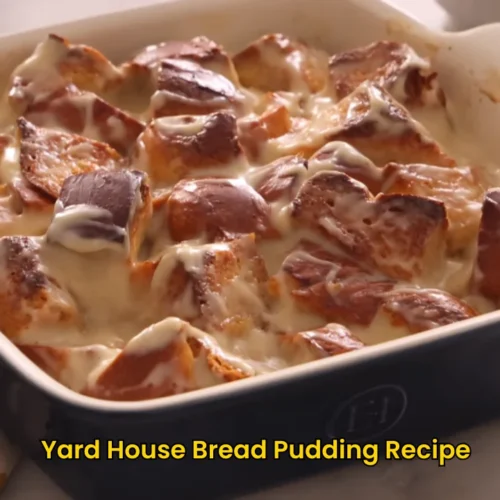
This is a homemade, restaurant-inspired interpretation of Yard House-style bread pudding, not a verified official recipe released by Yard House. The measurements and method are designed to give you a rich bread pudding with cinnamon flavor and a creamy vanilla pouring custard that you can make in your own kitchen.
Yard House Bread Pudding Recipe
Ingredients
- For the Bread Pudding
- 6 cups rich bread such as brioche or challah, cut into 2-inch cubes
- 2 cups whole milk
- ½ cup granulated sugar 100 g
- 3 tablespoons unsalted butter
- ½ teaspoon salt
- 1 teaspoon ground cinnamon
- 3 large eggs
- 1 tablespoon vanilla extract
- Optional additions: Toasted pecans chocolate chips, dried fruit, or toasted coconut.
- For the Vanilla Pouring Custard
- 1 cup whole milk
- 1 cup heavy cream
- 2 tablespoons unsalted butter
- ½ cup packed light brown sugar 110 g
- 2 tablespoons cornstarch
- ¼ cup water bourbon, dark rum, or brandy
- 1 tablespoon vanilla extract or vanilla bean paste
- Pinch of salt optional
- For the baking dish: A little extra butter for greasing an 8 × 8-inch casserole dish.
Instructions
- Step 1 – Prepare the Oven and Baking Dish: Preheat your oven to 350°F (175°C). Lightly butter an 8 × 8-inch casserole dish, making sure to coat the bottom and sides so the bread pudding does not stick. Set the dish aside while you prepare the bread.
- Step 2 – Cut and Prepare the Bread: Cut the bread into roughly 2-inch cubes until you have about 6 cups. Brioche or challah will give your bread pudding a rich, buttery texture, but you can also use sourdough or another type of bread you have on hand. Slightly stale bread works especially well because it absorbs the custard without falling apart too quickly. If your bread is fresh, spread the cubes on a baking sheet and let them sit out to dry, or place them in a 250°F oven for about 10 minutes. Allow the bread to cool before using it.
- Step 3 – Arrange the Bread in the Dish: Transfer the bread cubes to the buttered casserole dish. Spread them into an even layer, arranging some of the crusts facing upward for a more attractive finish. If you want to add toasted pecans, chocolate chips, dried fruit, or toasted coconut, scatter them among the bread cubes now.
- Step 4 – Warm the Cinnamon Custard Mixture: Add the whole milk, granulated sugar, butter, salt, and cinnamon to a saucepan. Place the saucepan over medium heat and stir occasionally until the butter has melted and the milk is warm. Do not bring the mixture to a boil. Once the butter has melted and the ingredients are well combined, remove the saucepan from the heat.
- Step 5 – Cool the Milk Mixture: Let the warm milk mixture cool for about 10 minutes. This is important because adding eggs to very hot milk can cause them to scramble, leaving unwanted cooked egg pieces in your custard.
- Step 6 – Add the Eggs and Vanilla: Crack the eggs into a small bowl and check for any pieces of shell. Whisk the eggs into the cooled milk mixture one at a time until each egg is fully incorporated. Add the vanilla extract and whisk again until the custard is smooth and evenly mixed.
- Step 7 – Pour the Custard Over the Bread: Slowly pour the prepared custard over the bread cubes in the casserole dish. Move the bread around gently if needed so the liquid reaches the bottom and coats all the pieces. Check that there are no dry bread cubes remaining on top. The bread should be evenly soaked in the custard.
- Step 8 – Let the Bread Soak: Leave the assembled bread pudding at room temperature for about 20 minutes. This gives the custard time to penetrate the bread, helping the finished pudding turn soft and moist throughout. If you want to prepare it ahead, cover the dish and refrigerate it until you are ready to bake.
- Step 9 – Bake the Bread Pudding: Place the casserole dish in the preheated oven and bake at 350°F (175°C) for 40–45 minutes. The top should become nicely golden, and a knife inserted into the center should come out clean. If the center still looks wet or loose, continue baking for a few more minutes and check again. Once baked, remove the dish from the oven and let the bread pudding rest briefly while you finish the sauce.
- Step 10 – Combine the Sauce Ingredients: To make the vanilla pouring custard, add the whole milk, heavy cream, butter, and packed light brown sugar to a medium saucepan. Place the saucepan over medium heat and stir occasionally with a whisk as the butter melts and the sugar dissolves. You can substitute 2 cups of half-and-half for the milk and cream if preferred.
- Step 11 – Prepare the Cornstarch Slurry: In a small bowl, combine the cornstarch with ¼ cup of water, bourbon, dark rum, or brandy. Whisk until the cornstarch has completely dissolved and the mixture is smooth. This slurry will help thicken the sauce and give it a rich, pourable texture. If you use alcohol, remember that some alcohol may remain after cooking.
- Step 12 – Thicken the Vanilla Custard Sauce: Once the milk and cream mixture begins steaming and the butter has melted, slowly pour in the cornstarch slurry while whisking constantly. Continue stirring over medium heat until the sauce thickens noticeably. This should happen fairly quickly. If the mixture begins to thicken too fast, lower the heat to prevent it from sticking to the bottom of the saucepan.
- Step 13 – Add the Vanilla and Finish the Sauce: Remove the thickened sauce from the heat. Stir in the vanilla extract or vanilla bean paste until fully combined. Add a pinch of salt if you want a little extra contrast against the sweetness. The finished sauce should be smooth, creamy, and thick enough to coat the back of a spoon while still being easy to pour.
- Step 14 – Serve the Bread Pudding: Spoon the warm vanilla custard sauce over the freshly baked bread pudding. Cut the pudding into portions and serve while warm, adding more sauce to each serving if desired. You can also serve it with a scoop of vanilla ice cream for a richer dessert.