Yard House Chicken Lettuce Wraps Recipe
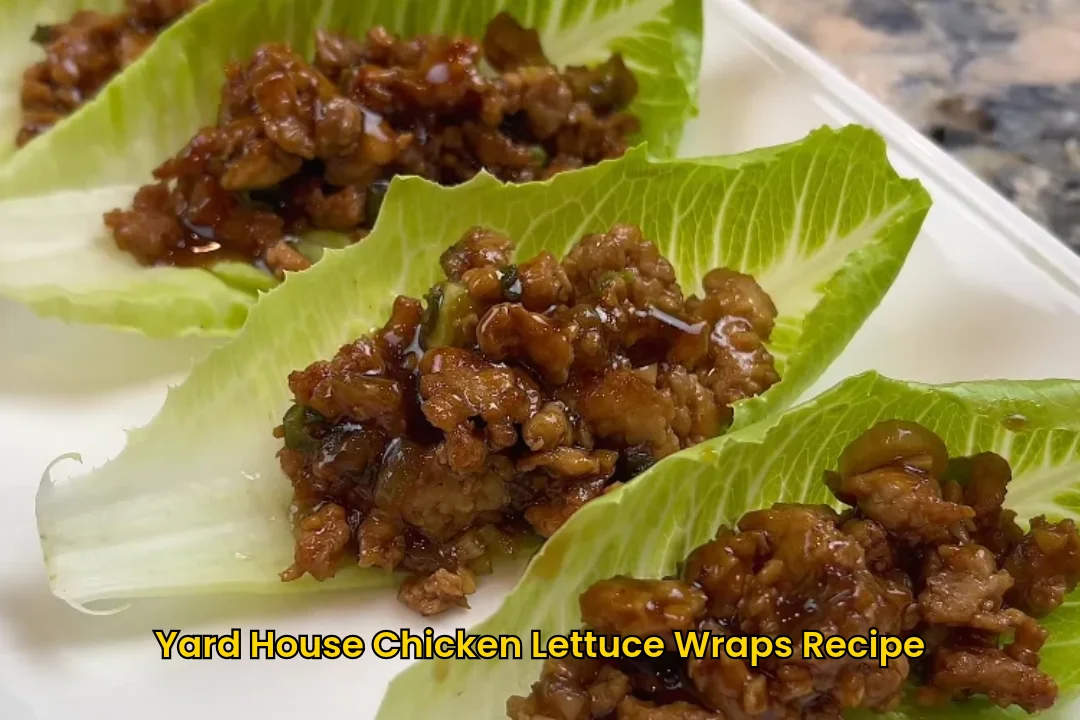
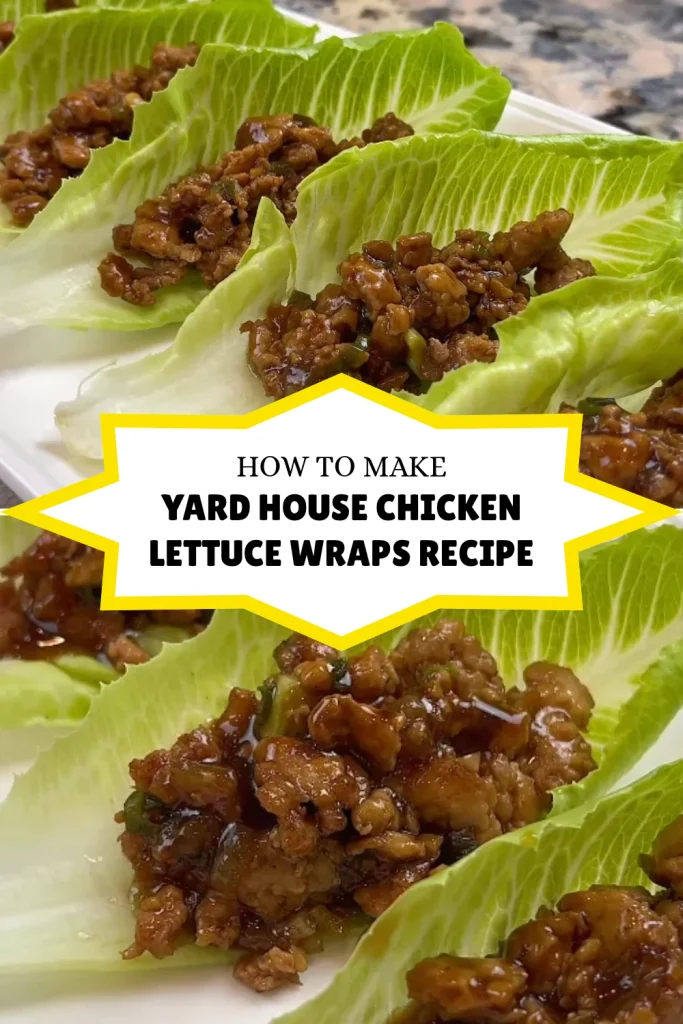
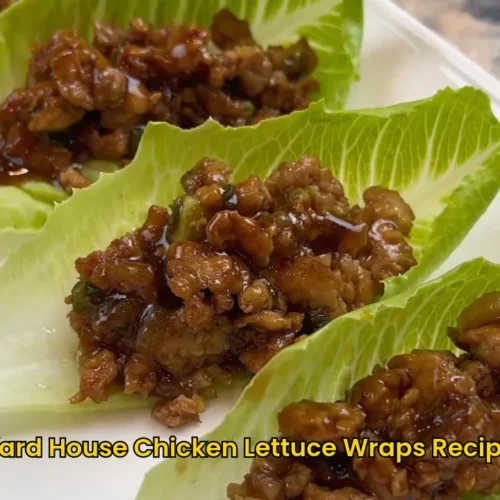
Yard House Chicken Lettuce Wraps are the kind of appetizer that makes a restaurant meal feel a little more special. You get warm, savory chicken, a rich sauce with sweet and salty notes, and crisp lettuce leaves that add a fresh crunch to every bite.
I love how the contrast between the hot filling and cool lettuce makes this dish satisfying without feeling too heavy.
This homemade Yard House Chicken Lettuce Wraps Recipe brings those restaurant-style flavors to your own kitchen with ground chicken, garlic, fresh ginger, soy sauce, and hoisin sauce.
A simple cornstarch sauce brings everything together, giving the chicken a glossy finish that works beautifully inside fresh lettuce cups. You don’t need special equipment or hard-to-find ingredients to make it. The best part is how easy these wraps are to customize.
You can make the filling ahead, prepare the lettuce just before serving, and let everyone assemble their own wraps at the table.
Serve them as a starter before your favorite Asian-inspired dinner, or pair them with steamed rice and vegetables for a complete meal you can enjoy at home.
What Makes These Chicken Lettuce Wraps Worth Making
These chicken lettuce wraps are worth making because they combine bold, savory flavors with fresh, crisp lettuce in a recipe that’s easy to prepare on a weeknight.
Ground chicken cooks quickly, while garlic, ginger, soy sauce, and hoisin build a rich, slightly sweet filling without requiring a long list of complicated ingredients.
What I especially like about this recipe is the balance of textures. The chicken is tender, the sauce turns glossy as it thickens, and the lettuce gives every bite a refreshing crunch.
If you’ve enjoyed restaurant-style lettuce wraps similar to those served at Yard House or Asian-inspired chicken cups at other restaurants, this homemade version offers a practical way to bring those flavors to your own table.
You can also adjust the sauce, add extra vegetables, or serve the filling over rice when you want something different.
What You Need to Make the Recipe
You need a large skillet, a cutting board, a sharp knife, a small mixing bowl, and a wooden spoon or spatula to make these chicken lettuce wraps. The skillet gives the ground chicken enough room to brown, while the bowl helps you mix the sauce before adding it to the pan.
The ingredients are simple, too. Ground chicken provides a tender, mild base that absorbs the seasonings well. Fresh garlic and ginger add the aromatic flavor you expect from an Asian-inspired dish, while regular soy sauce, dark soy sauce, and hoisin sauce create a savory, slightly sweet finish.
You’ll also make a quick cornstarch slurry to thicken the sauce. This small step makes a noticeable difference because it helps the sauce cling to the chicken instead of running straight off the lettuce. Iceberg lettuce is my first choice for sturdy, crunchy wraps, but romaine works when you prefer longer leaves.
Perfect For
- Restaurant-style appetizers at home: Serve these wraps before dinner when you want something that feels a little more special than an ordinary starter.
- Quick weeknight dinners: Ground chicken cooks quickly, so you can get the filling ready without spending hours in the kitchen.
- Casual family meals: Put the chicken, lettuce leaves, and extra sauce on the table and let everyone build their own wraps.
- Light lunch options: Enjoy a few lettuce cups when you’re craving a flavorful meal without a heavy bread or tortilla wrap.
- Game-day snacks: Arrange the lettuce and chicken separately so guests can assemble fresh wraps as they eat.
- Meal prep: Prepare the chicken filling ahead of time, then wash and dry the lettuce when you’re ready to serve.
- Asian-inspired dinner nights: Pair the wraps with steamed rice, stir-fried vegetables, or a simple noodle dish.
Ingredients for Yard House Chicken Lettuce Wraps
This recipe uses three groups of ingredients: the chicken filling, the thickened sauce, and the lettuce for serving. Each ingredient has a purpose, so a few small choices can make a difference in the final flavor.
For the Chicken Filling
1 pound ground chicken: Ground chicken is the main ingredient and absorbs the sauce beautifully. Use ground chicken thigh for a richer, juicier filling or ground chicken breast for a leaner option. Since lean chicken can dry out more easily, avoid cooking it longer than necessary.
1 tablespoon vegetable oil: A neutral oil helps soften the onion and cook the chicken without adding a strong flavor. Canola oil or avocado oil works just as well.
½ medium onion, finely diced: Onion gives the filling a mild sweetness and savory base. Dice it into small pieces so it blends into the chicken rather than creating large, crunchy chunks.
4 garlic cloves, finely minced: Fresh garlic adds the aromatic flavor that makes the filling taste more developed. Mince it finely and add it after the onion has started to soften to keep it from burning.
1 tablespoon fresh ginger, finely minced: Ginger adds a warm, slightly peppery note that balances the sweetness of the hoisin sauce. Fresh ginger is best here, although a smaller amount of ground ginger can work in a pinch.
1 tablespoon Chinese rice wine or Shaoxing cooking wine: This adds depth and a subtle savory aroma to the chicken. If you don’t have Shaoxing wine, dry sherry is a reasonable substitute. You can also leave it out, though the flavor will be a little less complex.
1 teaspoon granulated sugar: Sugar rounds out the saltiness of the soy sauce and supports the sweet-savory flavor of the filling. You don’t need to increase it because hoisin sauce already contributes sweetness.
1 tablespoon regular soy sauce: Regular soy sauce provides the main salty, savory seasoning. If you use reduced-sodium soy sauce, taste the filling before adding any extra salt.
1 teaspoon dark soy sauce: Dark soy sauce gives the chicken a deeper brown color and a richer appearance. It’s thicker and darker than regular soy sauce, so don’t replace it with an equal amount of additional dark soy sauce unless you want a stronger flavor.
2 tablespoons hoisin sauce: Hoisin adds sweetness, savory depth, and a thick consistency. It’s an important ingredient in creating the restaurant-style flavor. Different brands vary in sweetness, so choose one you enjoy.
¼ teaspoon ground white pepper: White pepper provides gentle warmth without the dark flecks of black pepper. Black pepper can be used if that’s what you have, but it will give the filling a slightly different finish.
2 green onions, finely chopped: Green onions bring a fresh, mild onion flavor that brightens the cooked chicken. Slice them thinly and stir them in near the end so they retain some freshness.
For the Sauce
2 tablespoons regular soy sauce: This gives the sauce its savory foundation. Use the same soy sauce you used for the filling to keep the flavors consistent.
1 tablespoon hoisin sauce: A little more hoisin brings sweetness and helps the sauce complement the chicken rather than overpower it.
1 teaspoon dark soy sauce: This deepens the sauce’s color and gives it a richer appearance.
1 teaspoon cornstarch: Cornstarch thickens the sauce into a glossy coating. Make sure you mix it with cold water before adding it to the hot skillet.
¼ cup cold water: Cold water helps the cornstarch disperse smoothly. Warm or hot water can make it harder to mix evenly.
⅛ teaspoon ground white pepper: This adds a small amount of warmth to the sauce. The quantity is intentionally modest because the chicken is already seasoned.
For Serving
1 large head iceberg lettuce or 1 head romaine lettuce: Iceberg lettuce provides wide, sturdy, crunchy leaves that work well as little cups. Romaine has longer leaves and a slightly different texture. Choose fresh lettuce with intact leaves, and dry each leaf thoroughly so the sauce doesn’t slide off.
Kitchen Equipment You’ll Need
Large skillet: A wide skillet gives the chicken room to cook evenly and lets excess moisture evaporate. A nonstick or stainless-steel skillet will work.
Sharp knife and cutting board: Use these to finely dice the onion and mince the garlic and ginger. Smaller pieces distribute more evenly through the filling.
Small mixing bowl: You’ll need this to prepare the cornstarch slurry before it goes into the sauce.
Measuring spoons and measuring cup: Accurate measurements help balance the soy sauce, hoisin, and cornstarch.
Wooden spoon or heat-resistant spatula: Use it to break the chicken into small pieces and stir the sauce as it thickens.
Paper towels and serving platter: Paper towels help dry the lettuce, while a wide platter makes it easy to arrange the leaves for serving.
How to Make Yard House Chicken Lettuce Wraps
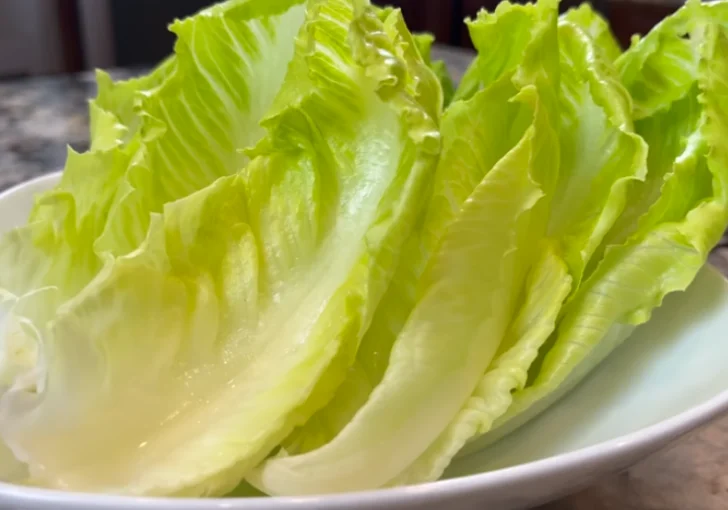
Step 1 – Prepare the Lettuce: Separate the lettuce leaves carefully, keeping them as whole as possible so you can use them as wraps. Rinse each leaf thoroughly under cold running water, then shake off the excess water and let the leaves drain. Pat them dry with paper towels if needed. Set the lettuce aside while you prepare the chicken and sauce ingredients.
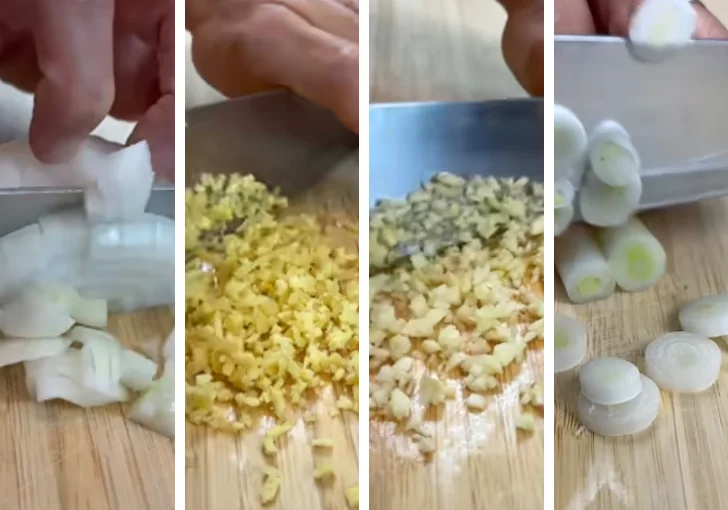
Step 2 – Chop the Aromatics: Finely dice half of a medium onion. Mince the four garlic cloves and the fresh ginger, keeping the pieces small so they distribute evenly throughout the chicken. Chop the two green onions into small pieces and set them aside. Measure the soy sauces, hoisin sauce, rice wine, sugar, and white pepper so everything is ready to add during cooking.
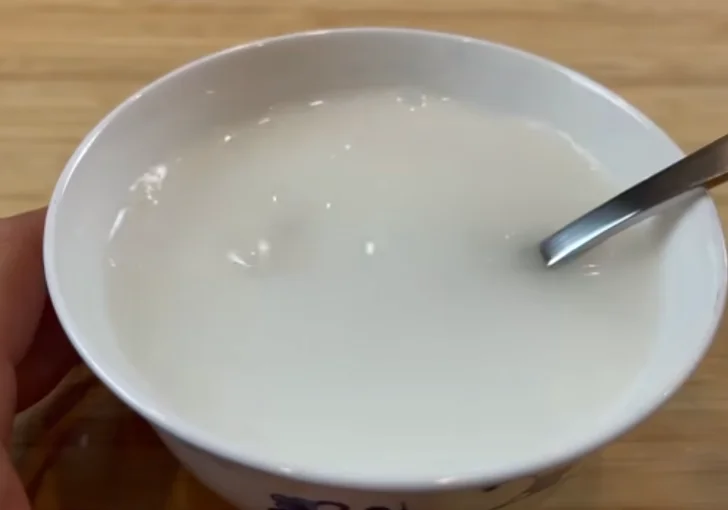
Step 3 – Make the Cornstarch Slurry: Add the cornstarch to a small bowl with the cold water. Stir until the cornstarch dissolves and the mixture looks smooth, with no dry lumps at the bottom. Set it aside for the sauce. The cornstarch will settle as it stands, so stir it again just before adding it to the pan.
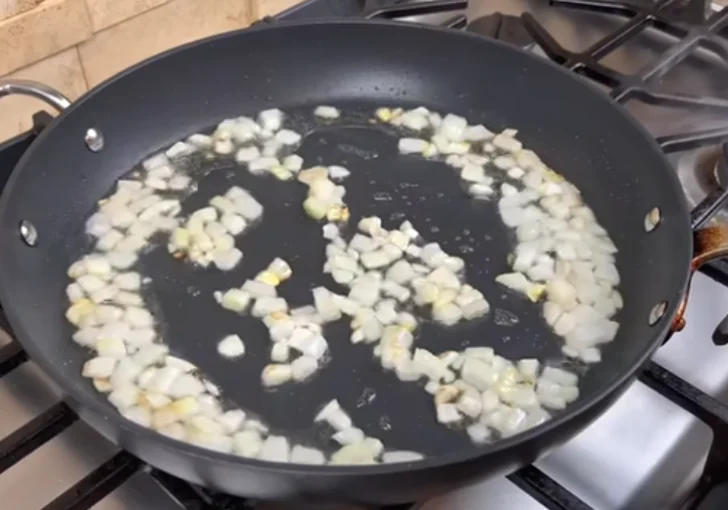
Step 4 – Sauté the Onion: Heat the vegetable oil in a large skillet over medium-high heat. Add the diced onion and stir-fry for about 1 minute, stirring frequently so it cooks evenly. Let the onion soften and develop lightly browned edges without letting it burn. This gives the chicken filling a savory base.
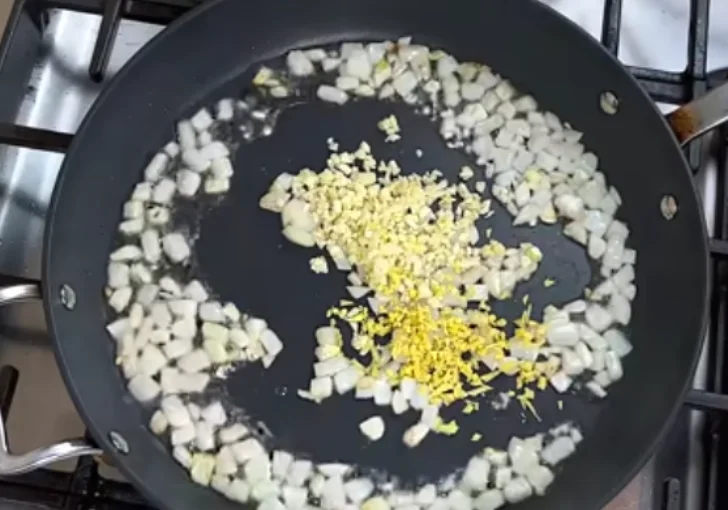
Step 5 – Add the Garlic and Ginger: Add the minced garlic and ginger to the skillet with the onion. Stir-fry for about 20–30 seconds, just until fragrant. Keep the ingredients moving because garlic can burn quickly over medium-high heat. Once the aroma becomes noticeable, move straight to the next step.
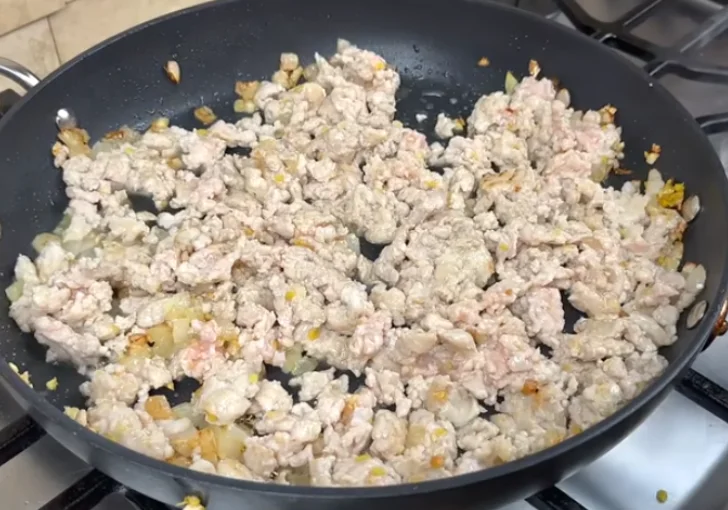
Step 6 – Cook the Ground Chicken: Add the ground chicken to the skillet. Use a wooden spoon or spatula to break it into small pieces as it cooks. Stir-fry until the chicken is about halfway cooked, with some pink still visible. Pour in the rice wine and continue cooking, breaking up any larger clumps. Cook until the chicken is mostly cooked through, then check that it reaches an internal temperature of 165°F (74°C) before serving.
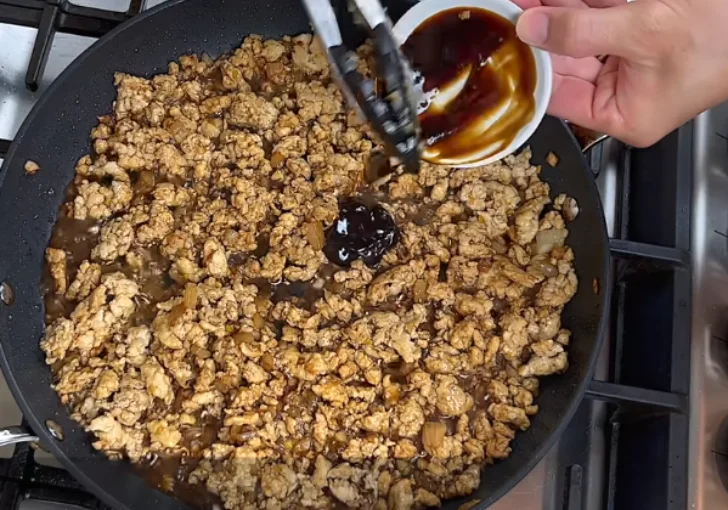
Step 7 – Season the Chicken: Sprinkle the sugar over the chicken and stir until it dissolves and coats the meat evenly. Add the regular soy sauce and dark soy sauce, then continue stir-frying until the chicken has an even brown color. Stir in the hoisin sauce and cook briefly so its sweet, savory flavor coats the filling. Add the white pepper and chopped green onions, stirring everything together until evenly combined.
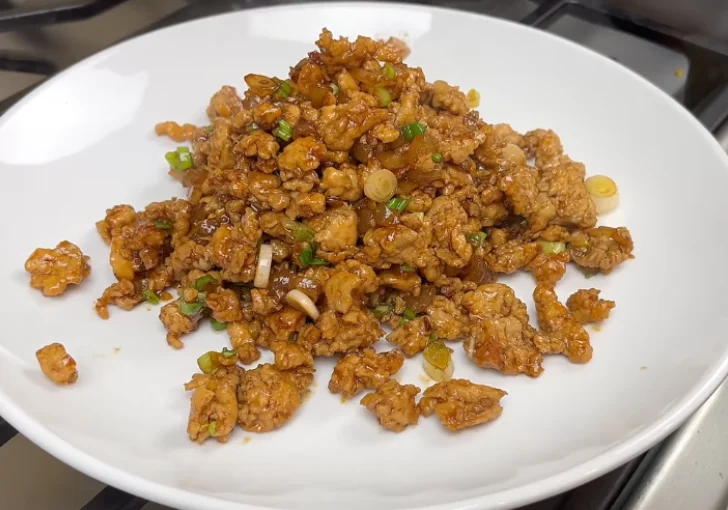
Step 8 – Transfer the Chicken Filling: Remove the cooked chicken mixture from the skillet and place it in a clean bowl. Keep the filling warm while you prepare the sauce. Leave the flavorful browned bits and any remaining juices in the skillet, as these will add extra flavor to the sauce.
Step 9 – Combine the Sauce Ingredients: Reduce the heat to low. Add the regular soy sauce, hoisin sauce, and dark soy sauce to the same skillet. Stir continuously for about 10 seconds, allowing the sauces to combine with the flavorful residue in the pan. Keep the heat low to prevent the sauce from scorching.
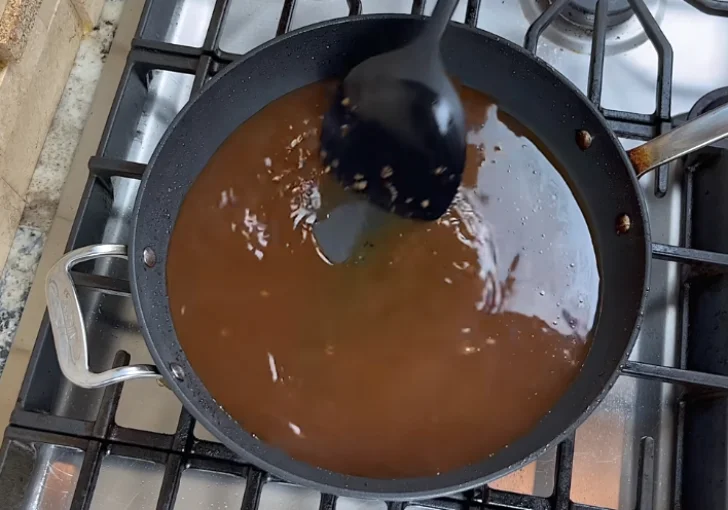
Step 10 – Thicken the Sauce: Stir the cornstarch slurry again to redistribute the settled starch. Pour it into the skillet while stirring the sauce continuously. Increase the heat to medium and bring the mixture to a gentle boil. Keep stirring as the sauce heats and thickens. Once it becomes glossy and thick enough to lightly coat a spoon, remove it from the heat. Stir in the white pepper.
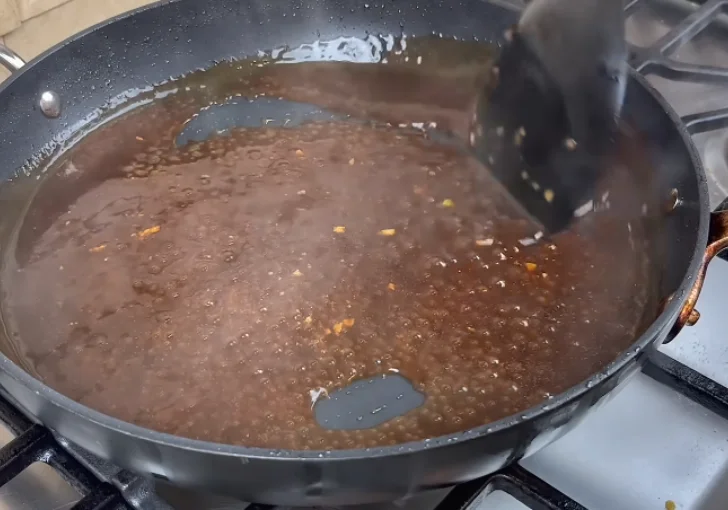
Step 11 – Assemble the Lettuce Wraps: Arrange the dry lettuce leaves on a serving plate. Spoon a portion of the warm chicken filling into the center of each leaf, leaving enough room around the edges to fold the lettuce without spilling the filling. Drizzle a little of the prepared sauce over each portion. Serve the remaining sauce on the side so everyone can add more as desired.
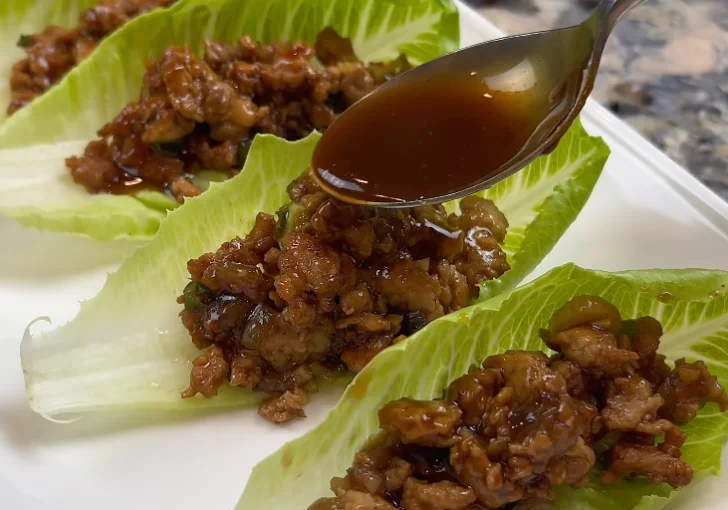
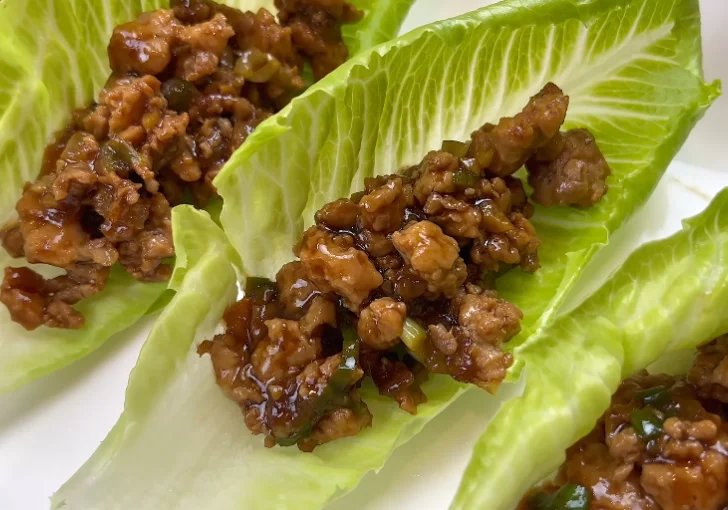
Step 12 – Serve Immediately: Serve the chicken lettuce wraps while the filling is warm and the lettuce is crisp. You can fold each lettuce leaf around the chicken like a small taco or eat it open-faced. For a simple restaurant-style meal, serve the wraps with steamed rice or your favorite Asian-inspired side dish.
Tips for Getting the Chicken and Sauce Right
Choose the right ground chicken: Ground chicken thigh tends to stay juicier than very lean breast meat. Either works, but don’t overcook the filling.
Keep the aromatics moving: Garlic and ginger can burn in less than a minute. Stir them constantly and add the chicken as soon as they’re fragrant.
Use both types of soy sauce: Regular soy sauce supplies saltiness, while dark soy sauce adds a deeper color. They serve different purposes in this recipe.
Don’t skip the hoisin: Its sweet, savory flavor helps give the chicken its restaurant-style character. Adding more soy sauce alone won’t produce the same result.
Stir the slurry before using it: Cornstarch sinks to the bottom as it sits. A quick stir prevents uneven thickening.
Keep the sauce gently bubbling: A rolling boil isn’t necessary. Moderate heat helps you control the thickness and reduces the chance of scorching.
Dry the lettuce well: Wet leaves make the wraps slippery and can water down the sauce.
Serve the components separately if needed: If you’re preparing the dish for guests, keep the chicken warm and the lettuce chilled until serving time.
What Lettuce Works Best for Chicken Lettuce Wraps
Iceberg lettuce is my first choice for these chicken lettuce wraps because it has a crisp bite and sturdy leaves that hold the filling without tearing easily. Choose a large, fresh head and look for broad leaves that curve naturally into cups.
Romaine is a good alternative when you prefer longer, boat-shaped leaves.
The best lettuce is one that’s fresh, dry, and large enough to hold a spoonful of chicken. You don’t need to find perfectly shaped leaves; just choose the strongest ones from the center and outer layers.
Lettuce options and what to expect:
- Iceberg lettuce: Very crisp, refreshing, and sturdy. It’s my top choice when you want a crunchy, restaurant-style wrap.
- Romaine lettuce: Slightly more leafy with long, narrow leaves. It holds the filling well, although the shape is less cup-like.
- Butter lettuce: Soft and tender, with naturally rounded leaves. It works nicely for smaller wraps, but the leaves can tear under heavy filling.
- Green leaf lettuce: Flexible and mild, making it suitable when you can’t find iceberg. Choose the larger leaves and double them if needed.
Mistakes to Avoid When Making Yard House Chicken Lettuce Wraps
Leaving the lettuce wet: Even a little water can make the sauce run and the wraps slippery. Pat the leaves dry before arranging them on the platter.
Cutting the aromatics too large: Big pieces of onion, ginger, or garlic can overwhelm a bite. Finely chop them so they mix evenly with the ground chicken.
Cooking the chicken in one large clump: Large pieces take longer to cook and don’t absorb the seasoning as evenly. Break the meat apart as soon as you add it to the skillet.
Overcooking lean chicken: Ground chicken breast can turn dry if you keep cooking it after it reaches 165°F (74°C). Use a thermometer and remove it from the heat when it’s safely cooked.
Adding the cornstarch directly to the hot pan: Dry cornstarch can form lumps. Mix it with cold water first, then stir the slurry into the sauce.
Making the sauce too thick: A heavy, paste-like sauce can overpower the filling. Aim for a glossy consistency that coats the chicken lightly. Add water a teaspoon or two at a time if necessary.
Using too much sauce in each wrap: The filling should be flavorful without soaking the lettuce. Start with a small drizzle and let everyone add more at the table.
Assembling the wraps too early: Warm chicken sitting in lettuce can soften the leaves. Keep the components separate until you’re ready to eat.
What to Serve with Chicken Lettuce Wraps
Steamed jasmine rice: A bowl of fluffy jasmine rice is a simple way to turn these lettuce wraps into a complete meal. Its mild flavor balances the salty-sweet chicken, and you can spoon any extra sauce over the rice instead of letting it go to waste.
Vegetable fried rice: Serve the wraps with vegetable fried rice when you’re craving a restaurant-style dinner at home. Peas, carrots, green onions, and scrambled egg add more texture to the plate. Keep the rice seasoning moderate so it doesn’t compete with the chicken sauce.
Stir-fried broccoli: Broccoli cooked with a little oil, garlic, and a splash of soy sauce makes a fresh, savory side. Leave the florets slightly crisp rather than soft. Their texture pairs well with the crunchy lettuce and tender ground chicken.
Asian-style cucumber salad: Thinly sliced cucumbers tossed with rice vinegar, a little sugar, and sesame seeds add a cool, tangy contrast. Serve the salad chilled in a small bowl beside the wraps. It’s especially refreshing when the chicken sauce tastes rich and sweet.
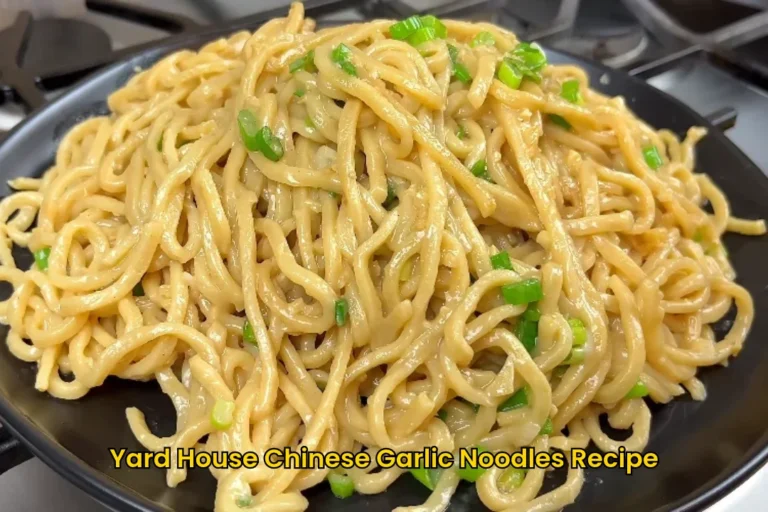
Garlic noodles: Soft noodles tossed with garlic, soy sauce, and a little sesame oil make the meal more filling. Keep the sauce light so the noodles don’t overpower the lettuce wraps. A sprinkle of green onions brings the flavors together on the plate.
Crispy spring rolls: If you’re serving these wraps as an appetizer, spring rolls make a satisfying addition. Their crisp wrappers contrast with the fresh lettuce and juicy chicken. Arrange them on a platter with a small dipping bowl, leaving room for the lettuce cups.
How to Store Leftovers, Freeze & Reuse
Leftovers: Store the cooked chicken filling in an airtight container in the refrigerator for 3–4 days at 40°F (4°C) or below. Keep the lettuce leaves separate in a clean container lined with paper towels. Refrigerate the chicken within two hours of cooking, or within one hour if the room temperature is above 90°F (32°C). Reheat the filling to 165°F (74°C) before serving.
Freeze: The cooked chicken filling can be frozen in a freezer-safe container for about 2–3 months for the best quality. Cool it promptly before freezing, divide it into meal-size portions, and label the container with the date. Freeze the filling without the lettuce. Thaw it in the refrigerator overnight rather than leaving it on the counter.
Reuse: Reheat the filling in a skillet over medium-low heat with a small splash of water if the sauce has thickened too much. Serve it in fresh lettuce cups, spoon it over steamed rice, or add it to a grain bowl with shredded carrots and cucumber. You can also use it as a filling for rice paper rolls, but keep the portions small so they don’t become soggy.
Frequently Asked Questions
Does this Yard House Chicken Lettuce Wraps Recipe taste exactly like the restaurant version?
This recipe is designed to deliver a similar restaurant-style experience with savory chicken, sweet hoisin, garlic, ginger, and crisp lettuce. However, without Yard House’s official recipe and preparation details, I can’t guarantee an exact match. You can adjust the sauce to suit your taste and bring the flavors closer to the version you remember.
Can I use ground turkey instead of ground chicken?
Yes, ground turkey is a good substitute. It has a similar texture and mild flavor, so it works well with the soy sauce, hoisin, garlic, and ginger. Cook it to an internal temperature of 165°F (74°C), just as you would ground chicken. If you use very lean turkey, watch it closely to prevent the filling from drying out.
Can I make the chicken filling ahead of time?
Absolutely. Cook the filling and sauce, let them cool promptly, and store them in separate airtight containers in the refrigerator. You can prepare them up to 3–4 days ahead, provided they’re refrigerated safely. When you’re ready to serve, reheat the chicken thoroughly and prepare fresh, dry lettuce leaves for the best crunch.
What can I use instead of hoisin sauce?
Hoisin is important because it contributes sweetness, savory depth, and thickness. If you don’t have it, you can mix a little soy sauce with a small amount of honey or brown sugar and a touch of peanut butter for a quick alternative. The flavor won’t be identical, so start with a small amount and adjust carefully.
How do I keep lettuce wraps from falling apart?
Choose large, sturdy leaves and dry them completely after washing. Iceberg is particularly useful because its leaves naturally form little cups. Avoid overfilling them, and spoon the chicken into the center rather than spreading it to the edges. If the leaves are small, use two together to create a stronger base.
Can I make these chicken lettuce wraps spicy?
Yes. Add red pepper flakes, a little chili garlic sauce, or your favorite hot sauce to the chicken while seasoning it. Start with a small amount so the heat doesn’t overpower the ginger and hoisin. You can also serve chili sauce on the side, which lets everyone adjust the spice level individually.
Are chicken lettuce wraps a complete meal?
They can be, especially when you serve several wraps with rice and vegetables. The chicken provides protein, while the lettuce adds freshness and crunch. For a more filling dinner, add steamed rice, noodles, or stir-fried vegetables. If you’re serving them as an appetizer, a few lettuce cups per person are a good starting point.
Yard House Chicken Lettuce Wraps Recipe
Ingredients
- For the chicken filling
- – 1 pound ground chicken
- – 1 tablespoon vegetable oil
- – ½ medium onion finely diced
- – 4 garlic cloves finely minced
- – 1 tablespoon fresh ginger finely minced
- – 1 tablespoon Chinese rice wine or Shaoxing cooking wine
- – 1 teaspoon granulated sugar
- – 1 tablespoon regular soy sauce
- – 1 teaspoon dark soy sauce
- – 2 tablespoons hoisin sauce
- – ¼ teaspoon ground white pepper
- – 2 green onions finely chopped
- For the sauce
- – 2 tablespoons regular soy sauce
- – 1 tablespoon hoisin sauce
- – 1 teaspoon dark soy sauce
- – 1 teaspoon cornstarch
- – ¼ cup cold water
- – ⅛ teaspoon ground white pepper
- For serving
- – 1 large head iceberg lettuce or 1 head romaine lettuce
Instructions
- Step 1 – Prepare the Lettuce: Separate the lettuce leaves carefully, keeping them as whole as possible so you can use them as wraps. Rinse each leaf thoroughly under cold running water, then shake off the excess water and let the leaves drain. Pat them dry with paper towels if needed. Set the lettuce aside while you prepare the chicken and sauce ingredients.
- Step 2 – Chop the Aromatics: Finely dice half of a medium onion. Mince the four garlic cloves and the fresh ginger, keeping the pieces small so they distribute evenly throughout the chicken. Chop the two green onions into small pieces and set them aside. Measure the soy sauces, hoisin sauce, rice wine, sugar, and white pepper so everything is ready to add during cooking.
- Step 3 – Make the Cornstarch Slurry: Add the cornstarch to a small bowl with the cold water. Stir until the cornstarch dissolves and the mixture looks smooth, with no dry lumps at the bottom. Set it aside for the sauce. The cornstarch will settle as it stands, so stir it again just before adding it to the pan.
- Step 4 – Sauté the Onion: Heat the vegetable oil in a large skillet over medium-high heat. Add the diced onion and stir-fry for about 1 minute, stirring frequently so it cooks evenly. Let the onion soften and develop lightly browned edges without letting it burn. This gives the chicken filling a savory base.
- Step 5 – Add the Garlic and Ginger: Add the minced garlic and ginger to the skillet with the onion. Stir-fry for about 20–30 seconds, just until fragrant. Keep the ingredients moving because garlic can burn quickly over medium-high heat. Once the aroma becomes noticeable, move straight to the next step.
- Step 6 – Cook the Ground Chicken: Add the ground chicken to the skillet. Use a wooden spoon or spatula to break it into small pieces as it cooks. Stir-fry until the chicken is about halfway cooked, with some pink still visible. Pour in the rice wine and continue cooking, breaking up any larger clumps. Cook until the chicken is mostly cooked through, then check that it reaches an internal temperature of 165°F (74°C) before serving.
- Step 7 – Season the Chicken: Sprinkle the sugar over the chicken and stir until it dissolves and coats the meat evenly. Add the regular soy sauce and dark soy sauce, then continue stir-frying until the chicken has an even brown color. Stir in the hoisin sauce and cook briefly so its sweet, savory flavor coats the filling. Add the white pepper and chopped green onions, stirring everything together until evenly combined.
- Step 8 – Transfer the Chicken Filling: Remove the cooked chicken mixture from the skillet and place it in a clean bowl. Keep the filling warm while you prepare the sauce. Leave the flavorful browned bits and any remaining juices in the skillet, as these will add extra flavor to the sauce.
- Step 9 – Combine the Sauce Ingredients: Reduce the heat to low. Add the regular soy sauce, hoisin sauce, and dark soy sauce to the same skillet. Stir continuously for about 10 seconds, allowing the sauces to combine with the flavorful residue in the pan. Keep the heat low to prevent the sauce from scorching.
- Step 10 – Thicken the Sauce: Stir the cornstarch slurry again to redistribute the settled starch. Pour it into the skillet while stirring the sauce continuously. Increase the heat to medium and bring the mixture to a gentle boil. Keep stirring as the sauce heats and thickens. Once it becomes glossy and thick enough to lightly coat a spoon, remove it from the heat. Stir in the white pepper.
- Step 11 – Assemble the Lettuce Wraps: Arrange the dry lettuce leaves on a serving plate. Spoon a portion of the warm chicken filling into the center of each leaf, leaving enough room around the edges to fold the lettuce without spilling the filling. Drizzle a little of the prepared sauce over each portion. Serve the remaining sauce on the side so everyone can add more as desired.
- Step 12 – Serve Immediately: Serve the chicken lettuce wraps while the filling is warm and the lettuce is crisp. You can fold each lettuce leaf around the chicken like a small taco or eat it open-faced. For a simple restaurant-style meal, serve the wraps with steamed rice or your favorite Asian-inspired side dish.