
Yard House Ahi Crunchy Salad Recipe (Best of All)
I have pretty high standards for a salad. If I’m going to call it dinner, I want it to have something going on. A few leaves of lettuce with chicken on top is not enough for me.
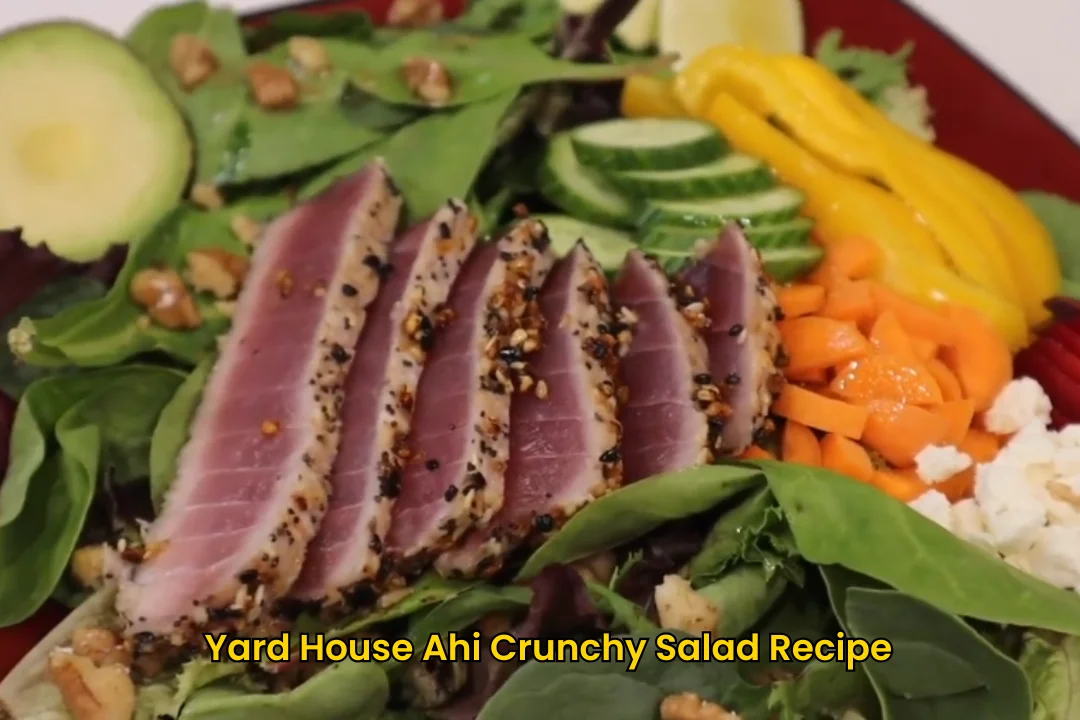
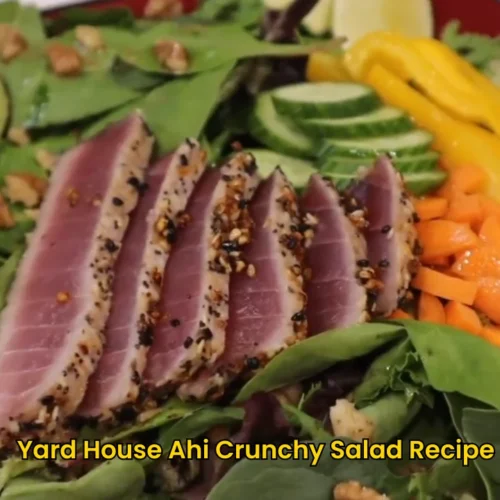
This Yard House Ahi Crunchy Salad Recipe has the kind of mix that keeps every bite interesting. You get cool, crisp greens and cucumber, creamy avocado, salty feta, sweet plum, crunchy walnuts, and slices of ahi tuna with a crust of Everything But the Bagel seasoning. The vinaigrette brings everything together without covering up the flavor of the tuna.
The tuna is also one of the reasons I like making this at home. It takes almost no time to cook, but you get to decide exactly how rare you want the center. The recipe isn’t complicated either. Most of the work is just slicing and arranging the ingredients, then giving the tuna a very quick sear in a hot skillet.
I can’t confirm that this exact version was created by a particular Yard House chef, so I wouldn’t claim this is the restaurant’s official recipe. Instead, this is a homemade copycat ahi crunchy salad version built around the ingredients and preparation that give the salad its fresh, crunchy, sweet, and savory combination.
It’s the kind of meal I make when I want something lighter but still want to feel like I actually ate dinner. You can serve it with crispy wonton strips, sesame crackers, or warm bread, and you can put extra vinaigrette on the table so you can dress your salad exactly the way you like.
Why This Ahi Tuna Salad Works
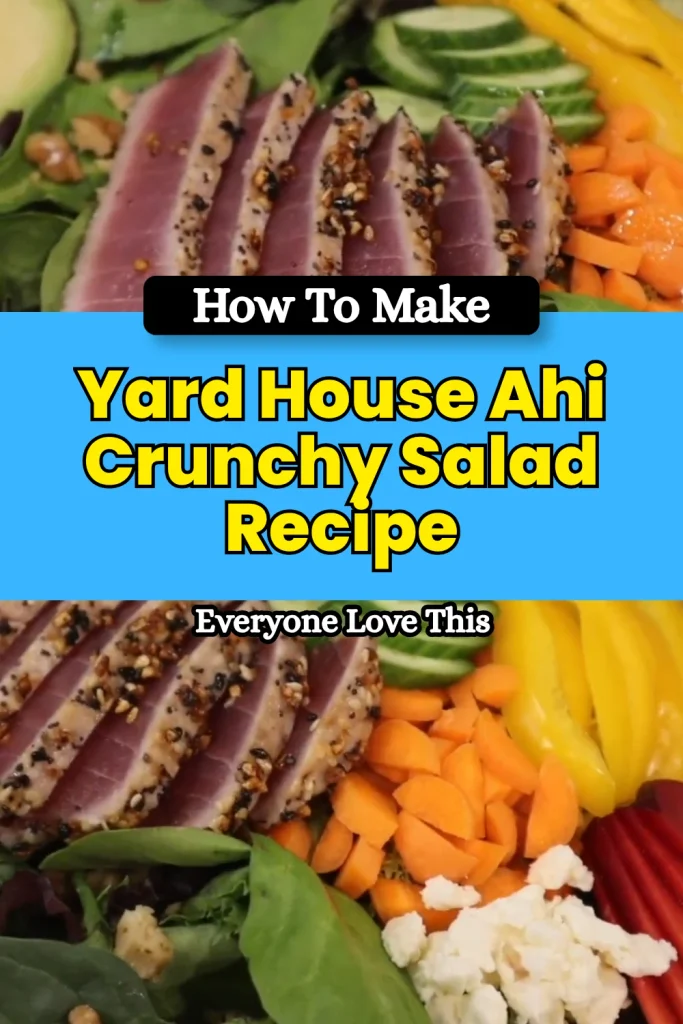
This ahi tuna salad works because every part of the plate has a different texture and flavor, but nothing overwhelms the tuna. The ahi is quickly seared so the outside gets a seasoned crust while the middle stays tender and rare.
Fresh cucumber and greens keep the salad cool, while avocado, feta, and walnuts add richness.
I also like the unexpected touch of fresh plum. It brings a little sweetness and juiciness that works nicely with the tangy vinaigrette and citrus. The Everything But the Bagel seasoning gives the tuna a savory, crunchy coating without requiring a complicated marinade.
It is the kind of combination that feels similar to a restaurant salad such as a seared tuna niçoise or an Asian-inspired ahi salad, but with a sweeter, fresher flavor profile.
How to Choose the Best Ahi Tuna for This Salad
The best ahi tuna for this salad is a fresh, high-quality tuna steak that you are comfortable serving rare in the center. Look for tuna that has a clean, fresh smell and firm flesh with an even color.
If you plan to eat it nearly raw in the middle, buy it from a reputable fish market or seafood counter and tell the seller you plan to serve it rare.
A steak between 6 and 8 ounces works well for one large entrée salad or two lighter portions. I prefer a steak that is fairly even in thickness because it sears more evenly and makes the quick cooking time easier to control.
Yellowfin tuna is commonly used for seared ahi recipes, but another high-quality tuna steak can work if it is suitable for quick searing and rare serving.
Keep the tuna cold until you are ready to cook it. Patting it dry before adding the olive oil is also helpful because excess moisture can interfere with the crust. The goal is simple: a hot pan, a very quick sear, and a cool pink center.
Perfect For
- A restaurant-style lunch at home when a regular sandwich just does not sound exciting.
- A light dinner that still feels filling because of the tuna, avocado, feta, and walnuts.
- Warm-weather meals when you want something fresh and colorful instead of a heavy cooked dish.
- Date-night cooking because the finished plate looks impressive without requiring difficult techniques.
- A special weekend lunch when you have good-quality ahi tuna and want to make the most of it.
- Anyone who loves texture because you get crisp greens, crunchy seasoning, creamy avocado, and tender tuna in the same bite.
Ingredients You’ll Need
For the Seared Ahi Tuna
1 ahi tuna steak, about 6 to 8 ounces – Choose a high-quality tuna steak with a firm texture and fresh smell. Since the center stays rare, quality matters here. A thicker steak is easier to sear without accidentally cooking all the way through.
1 tablespoon olive oil, divided – You will use part of the oil to coat the tuna and the rest for the skillet. A regular extra-virgin olive oil works well, although avocado oil is another good choice for high-heat cooking.
2 to 3 tablespoons Everything But the Bagel seasoning – This gives the tuna its signature crunchy, savory crust. Trader Joe’s is probably the best-known version, but any similar blend of sesame seeds, garlic, onion, poppy seeds, and salt will work. Use enough to coat the outside well without creating a thick layer that falls off in the pan.
For the Salad
3 cups mixed salad greens – Use your favorite mix. Spring mix gives the salad a softer texture, while baby spinach or arugula adds more flavor. Make sure the greens are washed and dried well so the dressing sticks instead of sliding off.
1/4 yellow bell pepper, thinly sliced – Yellow pepper adds crunch and mild sweetness. Orange or red bell pepper can easily take its place.
1/2 cup carrots, chopped or thinly sliced – Carrots add another crisp element and a little natural sweetness. Shredded carrots work too if that is what you have.
1 Persian cucumber, sliced – Persian cucumbers are great because they are crisp and have thin, tender skins. An English cucumber is the easiest substitute.
1 small plum, sliced – This might seem unusual in a tuna salad, but the sweet, juicy fruit balances the savory ingredients. A ripe but still firm plum works best so the slices hold their shape.
2 tablespoons feta cheese – Feta adds a salty, tangy bite. Crumbled goat cheese can work if you prefer something creamier.
2 tablespoons walnuts, chopped – Walnuts bring richness and crunch. Toast them briefly in a dry skillet if you want a deeper, nuttier flavor.
1/2 avocado, thinly sliced – Choose an avocado that is ripe but not overly soft. You want clean slices that hold their shape on the plate.
1 lime, cut into slices – The lime is partly for presentation, but a squeeze over the salad also adds bright acidity.
1 teaspoon lemon juice – Use this over the avocado to add freshness and help slow browning. Fresh lemon juice is best here.
2 to 3 tablespoons blush wine vinaigrette or strawberry vinaigrette – A slightly sweet, tangy dressing ties together the fruit, greens, and tuna. If you prefer more dressing, serve extra on the side rather than soaking the salad before serving.
Kitchen Equipment You’ll Need
You do not need a complicated setup for this salad, but having a few basics ready makes the process much easier.
- Large skillet or cast-iron pan – A heavy skillet is ideal because it gets hot enough to create a quick crust on the tuna. Cast iron works especially well, but a sturdy stainless-steel skillet is also a good choice.
- Sharp chef’s knife – You will use it for the vegetables, fruit, avocado, and tuna. A sharp knife is particularly important when slicing the seared tuna so you do not tear the crust.
- Cutting board – Keep your prep organized. If possible, use a clean board for slicing the cooked tuna after the vegetables are prepared.
- Large serving plate or shallow bowl – This salad looks best when the ingredients are arranged rather than tossed together. A wide plate gives the colorful ingredients room to stand out.
- Tongs or a fish spatula – These make it easier to turn the tuna quickly without disturbing the seasoning crust.
How to Make Yard House Ahi Crunchy Salad
Step 1 – Prepare the Fruits and Vegetables
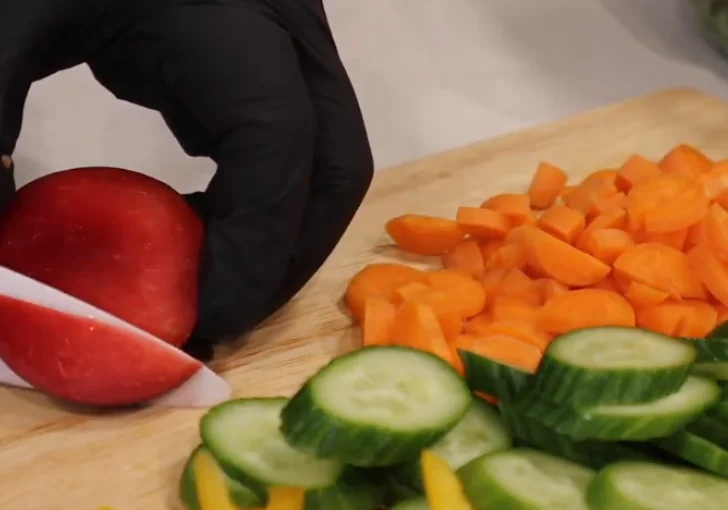
Wash and prepare the salad ingredients before cooking the tuna. Thinly slice the yellow bell pepper, chop or slice the carrots, slice the Persian cucumber, and cut the plum into small slices. Chop the walnuts if needed. Keep the avocado whole for now so it does not brown while you prepare the rest of the recipe.
Step 2 – Coat the Ahi Tuna with Olive Oil
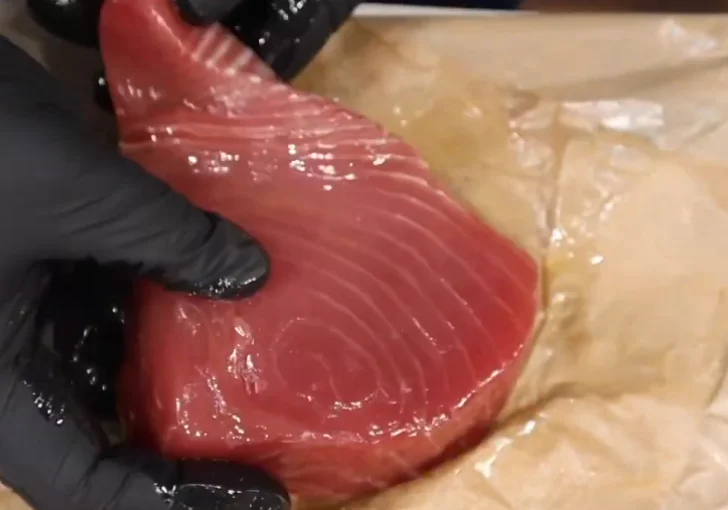
Place the ahi tuna steak on a plate or cutting board. Rub olive oil evenly over the top, bottom, and all four edges of the tuna. Make sure the entire outside is lightly coated because the oil helps the seasoning stick and helps create a nicely seared crust.
Step 3 – Season the Tuna
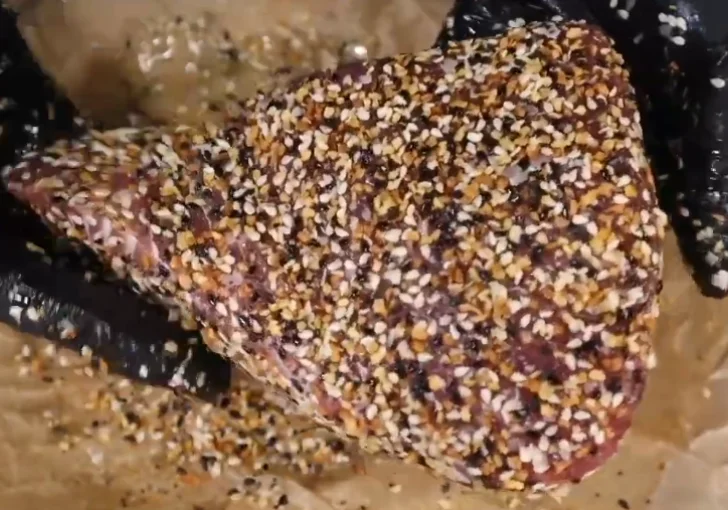
Sprinkle Everything But the Bagel seasoning generously over both flat sides and all of the edges of the tuna steak. Press the seasoning gently into the surface so it stays in place. The outside should be evenly coated to create a seasoned, crunchy crust after searing.
Step 4 – Build the Salad Base
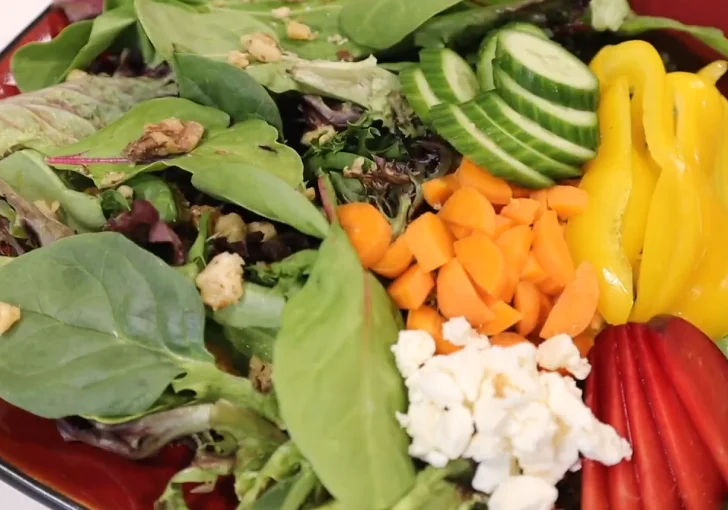
Arrange the mixed greens on a large serving plate. Spread them out naturally, then add the yellow bell pepper toward the front of the plate. Add the carrots, sliced cucumber, and plum in separate sections so the different ingredients remain visible. Place the feta cheese together in one small area of the plate, then sprinkle the chopped walnuts across the salad.
Step 5 – Heat the Skillet
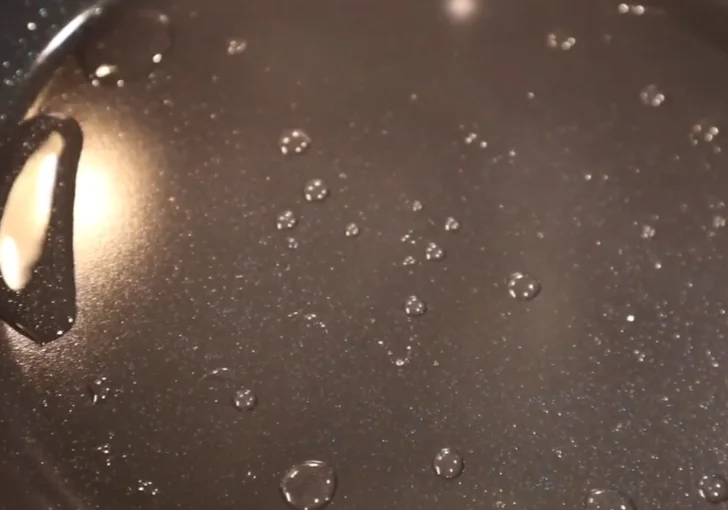
Place a skillet over very high heat until it becomes hot, then reduce the heat to about medium. Add a small drizzle of olive oil and let it heat briefly. The skillet needs to be hot enough to quickly sear the outside of the tuna without cooking the center all the way through.
Step 6 – Sear the Ahi Tuna
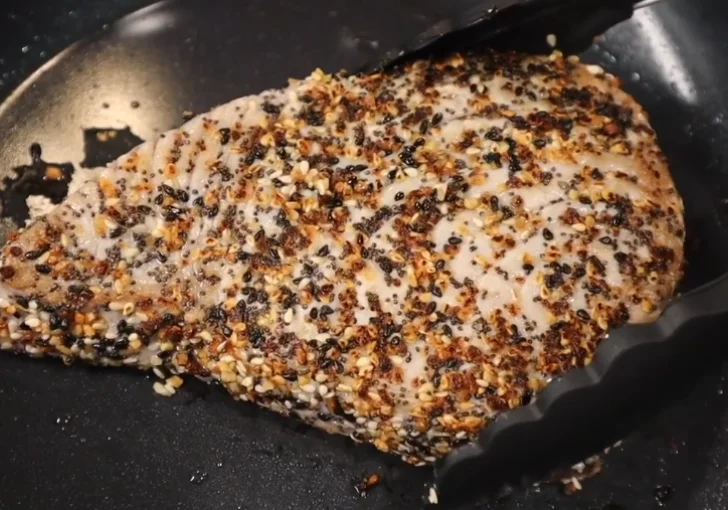
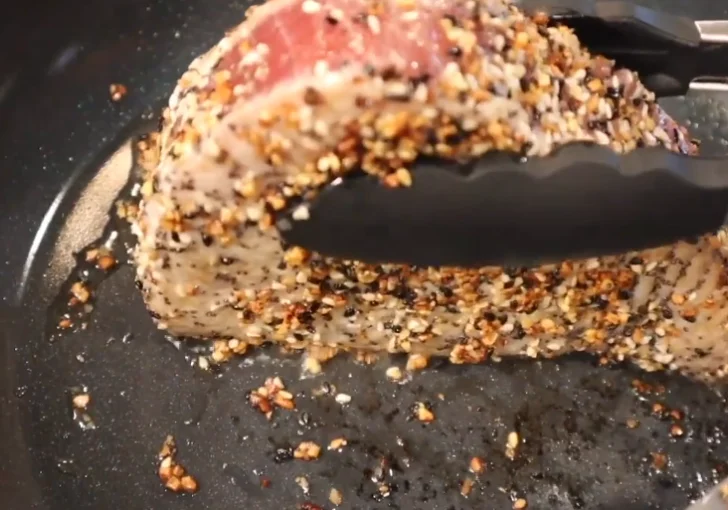
Carefully place the seasoned tuna steak into the hot skillet. Sear it for about 10 to 20 seconds on the first side, depending on how hot the pan is. Check the bottom for a light brown, crisp sear, then flip the tuna directly onto the opposite side and sear again for about 10 to 20 seconds.
Step 7 – Sear All of the Edges
Turn the tuna steak onto each of its remaining edges and briefly sear every side, including the short sides. Keep an eye on the side of the steak while cooking. The outside should develop a lightly browned crust while the center remains pink and mostly raw. Once all sides are evenly seared, remove the tuna from the skillet immediately.
Step 8 – Slice the Seared Tuna
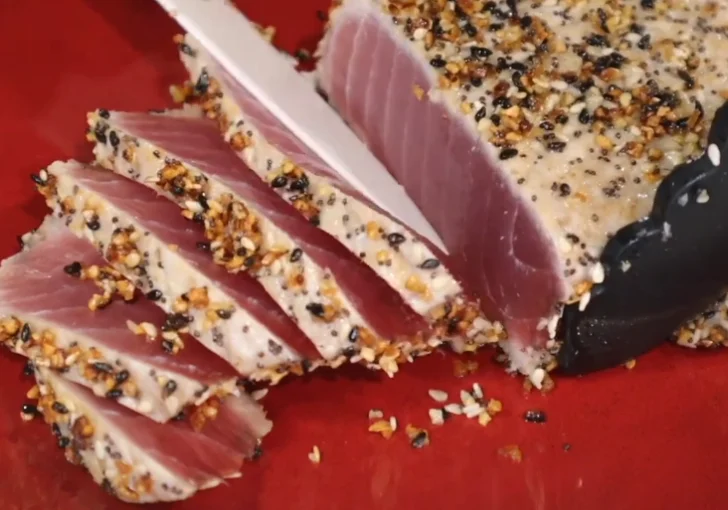
Place the seared ahi tuna on a cutting board and slice it diagonally into thin pieces. The finished slices should have a seasoned and lightly crisp exterior with a pink center. Cut enough slices to cover the prepared salad while keeping the slices neat and even.
Step 9 – Add the Avocado and Citrus
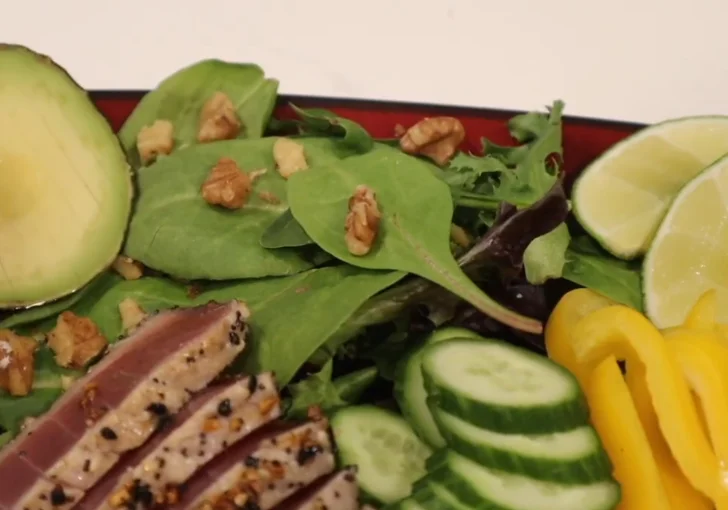
Slice the avocado diagonally and arrange it along the edge of the salad. Drizzle or lightly squeeze about 1 teaspoon of lemon juice over the avocado to add freshness and help slow browning. Place a few lime slices around the back or side of the plate for extra citrus flavor and presentation.
Step 10 – Finish and Serve the Salad
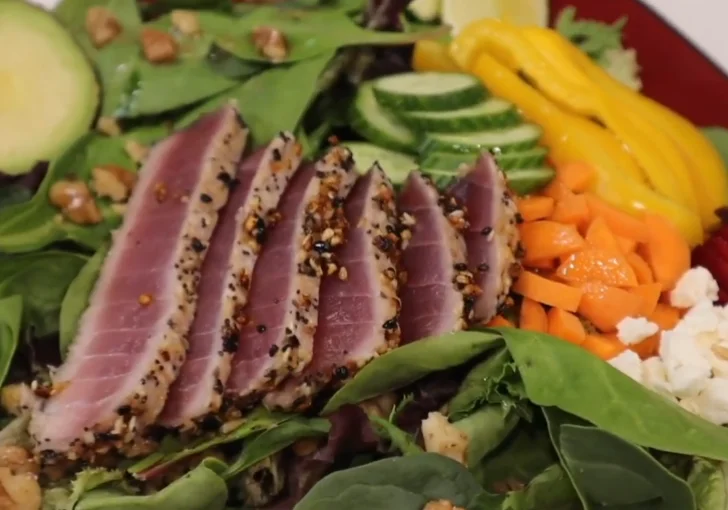
Arrange the sliced seared ahi tuna over the prepared salad. Drizzle the blush wine vinaigrette or strawberry vinaigrette lightly over the salad just before serving. For a lighter presentation, serve the dressing on the side instead. Serve immediately while the tuna is freshly seared and the salad ingredients are crisp.
Recipe Perfection Tips
- Start with very cold tuna. Keep it refrigerated until you are ready to season and sear it. Cold tuna makes it easier to create that contrast between the warm crust and rare center.
- Dry the surface first. Moisture is the enemy of a good sear. A quick pat with a paper towel can make a noticeable difference.
- Get the skillet hot before adding the tuna. The entire cooking process is extremely short, so the pan has to do its job immediately.
- Do not overcrowd the pan. If you are making more than one steak, cook them in batches. A crowded skillet loses heat.
- Slice with a sharp knife. A dull knife can drag through the tuna and pull off the seasoning.
- Dress the salad at the last minute. The vinaigrette can soften the greens quickly, especially if the salad sits for more than a few minutes.
- Taste the seasoning before adding extra salt. Everything But the Bagel seasoning and feta both contain salt, so the finished salad may not need much more.
Make-Ahead and Storage Tips
- Prep the vegetables ahead: You can wash and slice the bell pepper, carrots, cucumber, and plum a few hours before serving. Store them in separate airtight containers in the refrigerator.
- Wait on the avocado: Slice the avocado shortly before serving. Lemon juice helps slow browning, but it will not keep it perfectly green forever.
- Keep the greens dry: Wash them in advance if needed, but dry them thoroughly and store them with a paper towel in an airtight container.
- Cook the tuna just before serving: This is the one part I would not fully make ahead. The salad tastes best when the tuna is freshly seared and sliced.
- Store dressing separately: Keeping the vinaigrette away from the greens prevents the salad from becoming soggy.
The Most Important Part: How to Keep Ahi Tuna Rare
The secret to rare ahi tuna is high heat and very little time. You want the skillet hot enough to quickly brown the seasoned outside while the center stays cool, pink, and tender. Once the tuna starts cooking too deeply, there is no way to bring that rare texture back.
Flavor Breakdown
- Seared crust – Savory, nutty, and lightly crisp from the Everything But the Bagel seasoning.
- Rare ahi center – Clean, tender, and mild with a rich seafood flavor.
- Fresh vegetables – Cool and crisp, keeping each bite from feeling heavy.
- Plum and vinaigrette – Sweet and tangy, giving the salad a brighter restaurant-style finish.
- Avocado and feta – Creamy and salty, adding richness around the lean tuna.
- Walnuts – Earthy and crunchy, bringing one more layer of texture to the plate.
Common Mistakes When Making Seared Ahi Tuna Salad
- Using a pan that is not hot enough: The tuna will sit and cook instead of searing quickly. You may end up with a thick gray ring and less contrast between the crust and center.
- Cooking the tuna too long: Ten to 20 seconds per side can feel almost too short, but the tuna continues cooking around the edges. If you prefer it rare, watch the clock closely.
- Skipping the edges: Searing only the top and bottom leaves the sides plain and makes the slices look less finished. Give each edge a quick turn.
- Adding dressing too early: A vinaigrette-covered salad can lose its crispness before the tuna is even ready. Dress it at the last possible minute.
- Using an overripe avocado: A very soft avocado can turn into a smear instead of clean slices. Choose one that gives slightly when pressed.
- Overloading the plate: The best bites include several ingredients together. If you pile on too many walnuts, feta, or dressing, the delicate flavor of the tuna can get lost.
What to Serve With Ahi Crunchy Salad
Crispy wonton strips or sesame crackers are an easy match when you want even more crunch. They also give the meal a little more of that restaurant appetizer feel. I like serving them on the side so they stay crisp instead of softening under the dressing.
A cup of miso soup makes this salad feel like a complete lunch without making the meal too heavy. The warm, savory broth is a nice contrast with the cold vegetables and rare tuna, especially if you are serving the salad as a lighter dinner.
Crusty bread with olive oil works surprisingly well with the sweeter vinaigrette and creamy avocado. Keep the bread simple so it does not compete with the salad. A few warm slices on the side are enough to make the plate more filling.
Chilled fruit or a simple citrus salad is a good choice when serving this as part of a larger warm-weather meal. Since the plum already brings sweetness to the main dish, choose bright fruit such as orange, grapefruit, or berries rather than a heavy dessert.
For plating, I would keep the tuna slices visible rather than burying them under the greens. You can arrange the avocado along one side, scatter the walnuts lightly, and place the lime where guests can easily grab a slice for an extra squeeze.
How To Store Leftovers, Freeze & Reuse
Leftovers
Store leftover tuna and salad separately whenever possible. Keep the tuna in an airtight container in the refrigerator at 40°F or below and use it within 1 to 2 days for the best quality. Because the tuna is served rare, proper refrigeration is especially important.
Freeze
I do not recommend freezing the fully assembled salad. The greens, cucumber, plum, and avocado will lose their texture after thawing. Cooked or seared leftover tuna can be frozen, but its texture may change, so this recipe is best enjoyed fresh.
Reuse
Use leftover tuna in a fresh grain bowl, rice bowl, or another salad the next day. Add the tuna cold rather than reheating it if you want to preserve its tender center. Discard leftovers if they have been left at room temperature for more than 2 hours, or 1 hour in very hot conditions.
FAQs
Can I use frozen ahi tuna for this recipe?
Yes, as long as it is high quality and properly thawed according to safe handling instructions. Thaw it in the refrigerator, not on the kitchen counter, and pat it dry before seasoning.
Does the tuna have to be rare?
No, but this recipe is designed around a quick sear and rare center. If you prefer your tuna more cooked, increase the searing time gradually. Just remember that a longer cook will change the soft, tender texture that makes seared ahi special.
What can I use instead of Everything But the Bagel seasoning?
You can make a simple substitute with sesame seeds, poppy seeds, dried garlic, dried onion, and a small amount of salt. Black and white sesame seeds together also give the tuna a nice restaurant-style appearance.
Can I use a different fruit instead of plum?
Absolutely. Sliced peach, nectarine, strawberries, or even mango can work nicely. Choose fruit that brings a little sweetness without becoming too soft or watery.
What dressing is closest to the flavor this salad needs?
A blush wine vinaigrette or strawberry vinaigrette works well because the salad benefits from a little sweetness and acidity. A raspberry vinaigrette could also be a good substitute if that is easier to find.
Can I make this Yard House Ahi Crunchy Salad Recipe for more than one person?
Yes. Double or triple the ingredients and cook the tuna steaks in batches if necessary. Build individual plates or arrange everything on a large platter, then add the sliced tuna right before serving.
Can I prepare the whole salad in advance for meal prep?
You can prepare most of the vegetables and greens ahead, but I would wait to slice the avocado, dress the salad, and sear the tuna until close to serving. Those three steps make the biggest difference in keeping the finished salad fresh, crisp, and restaurant-quality.
Yard House Ahi Crunchy Salad Recipe
Ingredients
- For the Seared Ahi Tuna
- 1 ahi tuna steak about 6 to 8 ounces
- 1 tablespoon olive oil divided
- 2 to 3 tablespoons Everything But the Bagel seasoning
- For the Salad
- 3 cups mixed salad greens
- 1/4 yellow bell pepper thinly sliced
- 1/2 cup carrots chopped or thinly sliced
- 1 Persian cucumber sliced
- 1 small plum sliced
- 2 tablespoons feta cheese
- 2 tablespoons walnuts chopped
- 1/2 avocado thinly sliced
- 1 lime cut into slices
- 1 teaspoon lemon juice
- 2 to 3 tablespoons blush wine vinaigrette or strawberry vinaigrette for serving
Instructions
- Step 1 – Prepare the Fruits and Vegetables: Wash and prepare the salad ingredients before cooking the tuna. Thinly slice the yellow bell pepper, chop or slice the carrots, slice the Persian cucumber, and cut the plum into small slices. Chop the walnuts if needed. Keep the avocado whole for now so it does not brown while you prepare the rest of the recipe.
- Step 2 – Coat the Ahi Tuna with Olive Oil: Place the ahi tuna steak on a plate or cutting board. Rub olive oil evenly over the top, bottom, and all four edges of the tuna. Make sure the entire outside is lightly coated because the oil helps the seasoning stick and helps create a nicely seared crust.
- Step 3 – Season the Tuna: Sprinkle Everything But the Bagel seasoning generously over both flat sides and all of the edges of the tuna steak. Press the seasoning gently into the surface so it stays in place. The outside should be evenly coated to create a seasoned, crunchy crust after searing.
- Step 4 – Build the Salad Base: Arrange the mixed greens on a large serving plate. Spread them out naturally, then add the yellow bell pepper toward the front of the plate. Add the carrots, sliced cucumber, and plum in separate sections so the different ingredients remain visible. Place the feta cheese together in one small area of the plate, then sprinkle the chopped walnuts across the salad.
- Step 5 – Heat the Skillet: Place a skillet over very high heat until it becomes hot, then reduce the heat to about medium. Add a small drizzle of olive oil and let it heat briefly. The skillet needs to be hot enough to quickly sear the outside of the tuna without cooking the center all the way through.
- Step 6 – Sear the Ahi Tuna: Carefully place the seasoned tuna steak into the hot skillet. Sear it for about 10 to 20 seconds on the first side, depending on how hot the pan is. Check the bottom for a light brown, crisp sear, then flip the tuna directly onto the opposite side and sear again for about 10 to 20 seconds.
- Step 7 – Sear All of the Edges: Turn the tuna steak onto each of its remaining edges and briefly sear every side, including the short sides. Keep an eye on the side of the steak while cooking. The outside should develop a lightly browned crust while the center remains pink and mostly raw. Once all sides are evenly seared, remove the tuna from the skillet immediately.
- Step 8 – Slice the Seared Tuna: Place the seared ahi tuna on a cutting board and slice it diagonally into thin pieces. The finished slices should have a seasoned and lightly crisp exterior with a pink center. Cut enough slices to cover the prepared salad while keeping the slices neat and even.
- Step 9 – Add the Avocado and Citrus: Slice the avocado diagonally and arrange it along the edge of the salad. Drizzle or lightly squeeze about 1 teaspoon of lemon juice over the avocado to add freshness and help slow browning. Place a few lime slices around the back or side of the plate for extra citrus flavor and presentation.
- Step 10 – Finish and Serve the Salad: Arrange the sliced seared ahi tuna over the prepared salad. Drizzle the blush wine vinaigrette or strawberry vinaigrette lightly over the salad just before serving. For a lighter presentation, serve the dressing on the side instead. Serve immediately while the tuna is freshly seared and the salad ingredients are crisp.


